Page text
No text on this page.
THE SIMPLE STORY

of how          some       sea-creatures,    in-
sects and reptiles are formed and
how animals and humans are born.
All children have asked their par-
ents questions on these lines. Here,
in     clear,        simple    pictures      and
straightforward            language,      Marie
Neurath gives the answers.

We look through a microscope as
the tiny bud becomes a hydra. We
see     the     young      crocodile    boring
through its shell.            We watch the
minute kangaroo, smaller even than
your little finger, finding its way
into     the     mother’s      pouch.       Here
is    the safe,       selfcontained world
in which a human baby grows.


10-14


       See back flap for        3'6
      other titles
                                 NET

                              LIBRARY

                              EDITION
No text on this page.
THE SIMI

of how        son
sects and rey
how animals
All children
ents question
in clear, s
straightforwa
Neurath give

We look thr
the tiny bud
see the yor
through its
minute kang:
your little fi
into    the     m
is   the safe,
in which a


10-14


       See back ,
       other title
A New Life Begins
strai


into
A NEW LIFE
                                 BEGINS
     Marie Neurath


FLETCHER & SON LTD - NORWICH   Max Parrish   London   U
TH LIST OF CONTENTS
of
sect:
how One Tiny Animal Splits into Two
All
A Bud which Grows into an Animal
ents
in Two Different Buds Start a New Life
stra
The Floating Serpent Star Settles Down
Nev
Growing Up With Food Stores, or Without
the Parents that Crawl with Young that Swim
see
thre
A Family Likeness Right from the Start
mir Forty Thousand Eggs, or Just a Few
you
inte
From Life in Water to Life on Land
is The “Pond” Within the Shell of an Egg
in’ }
A Savage, Scaly Youngster Breaks Through
10-,
a Hard Shell
A Special Pocket as a Portable Nest
The Kangaroo No Bigger than Your Finger
An Unborn Rabbit Feeds and Grows
A Fur-lined Nest for a New-born Family
How a Baby Lives Before It is Born
A Baby Comes into the World
When Two Babies are Born Together
Twins are Not Always Very Much Alike
Baby Feeds in Mother’s ArmsOne Tiny Animal
Splits into Two
This tiny bell-like animal is
fixed to a weed or stone.
Now and then it divides into
two halves which then pull
apart. One part stays behind,
but the other one grows little
threads with which it swims
away to feed somewhere else.
Later on, it too grows a stalk,
and like its twin, settles down
at the bottom of the pond.
A Bud which Grows into an Animal


see

thre
mir
you

inte
is
in


10-


                                      ,      @          gz
       With a lens you can see this little tube-like hydra cling-
       ing to pond weeds. It has stinging tentacles to catch its
       food, such as little fish. Sometimes buds grow on the
       hydra and these develop into tiny hydras with tentacles.
       They then break off and begin to feed on their own.


       6
Two Different Buds Start a New Life
7
CeeA) oe OK |.
‘ ian
Sometimes hydras have smaller buds. Some contain eggs,
others sperms. When the buds burst, the sperms swim
out; if one finds an egg in an open bud, it wriggles into
it. The egg grows until it drops and currents carry it
away. In some weeks, its shell bursts; out comes a hydra. L
7 etThe Floating Serpent Star Settles Down
The female serpent star squeezes out her tiny eggs into the
water. Sperms, even smaller, are shed by the male. When
a sperm wriggles into an egg, the egg can start to grow.
(9)


The young serpent star, shown very
much enlarged, looks quite differ-
ent from the adult. It floats about —
on the top of the sea, like a dande-
lion seed in air. It feeds there for    —~_—~   ~“——__
several weeks changing almost com- Sa
pletely. Six swimming arms shrink
up: the other two are cast off. It then
falls to the bottom of the sea and      ~~" S7X®@_
finishes growing into a serpent star,   ~~ ——-____-—
Growing Up With Food Stores, or Without


This squid lives in the sea, and on
meeting enemies can change colour
or squirt ink and         shoot    backwards
at   enormous       speeds.   Sperms       have
entered   the   eggs      before    they    are
laid in bunches on the rocks. Each
egg is transparent and full of yolk
(shown green); slowly a perfect little
squid (red) forms inside it, having
lived all the time on the yolk.
It   breaks   out    of   the     egg   cover,
looking just like its parents.


10
Sperms of a clam enter the gills of a female where her
eggs grow. Mother clam drives her children out young.


=svUuUT
  Sy
The young clam has no yolk and would have died, but its
sticky thread has caught on to a fish which it grips with
little hooks. It roots itself into his flesh to feed on him.
When it has a foot and muscles, the clam breaks away.

                                                          It
Parents that Crawl with Young that Swim
The lobster’s growing eggs
are stuck underneath the
mother’s tail for nearly a
year. The big-eyed young, no
longer than a small finger-
nail, and very different from
their parents, rise to the
top of the sea and swim
about for six months. Then
they slowly change, sink to
the bottom and crawl like
their parents.
2
A Family Likeness Right from the
                                 Start


                               This insect is a grasshopper.
                               Grasshoppers lay their eggs,
                               which are full of yolk, in
                               holes in the ground.


As soon as it hatches out, the little grasshopper or locust
looks like its parents, although it has no wings, and it
feeds on green plants right away. It grows very fast.
The hard skin cannot stretch, so it has to be shed five
times, and a new skin has to be grown every time. Then
the grasshopper becomes an adult with wings.                   L


                                                          13   et
Forty Thousand Eggs, or Just A Few
The female herring (shown
darker) is laying her eggs
which stick to the sea bed.
The male herring is shedding
sperms over them. Of the
40,000 eggs laid in a year,
only one or two grow up;
most of them are eaten. A
baby fish grows on the yolk
inside the egg. When it hat-
ches, it drifts with the tides,
finishing off the yolk, then
it swims in search of food.
ooe~—
Loe
Many fish do not lay their
eggs until they have re-
ceived sperms. The male
ray in the picture passes
his sperms into the female,
and they enter the eggs in-
side her. As an egg grows,
it    is    wrapped         in    a   hard,
thick case and then laid. A
ray lays only a few eggs,
but most of them live. When
the        yolk   is     used     up, the
young ray              leaves    the case.
From Life in Water to Life on Land
In spring, when the female frog has laid her eggs in the
 pond and the male has shed his sperms over them, the
 egg starts   to grow into a tadpole with a cushion of jelly
 round it. After  two weeks, the tadpole hatches out and
 grows gills like a fish. After six weeks, its back legs begin
 to grow,     and later its front legs.   First   a   plant-eater, it
 now catches insects. Lungs grow inside its body, its tail
 shrinks. It becomes a tiny frog which can live on land.


—a—
                       *


                                                                   uy,
The “Pond” Within the Shell of an Ege
See
Shtassso
1G
Reptiles can lay their eggs away from water, so can birds.
The egg has a hard shell and cannot dry up. There is the
watery white of the ege. Later a water-cushion (blue) is
made. So the animal (red) grows in its own little “pond”.
18Air is taken in through tiny holes in the shell. As the
animal gets bigger it needs more air: a pocket (black dots)
develops which acts like a lung. These big eggs hold all
the yolk which the little animal needs for food (green).
1)A Savage, Sealy Youngster
Crocodiles and alligators leave their eggs to be hatched
out by the warmth of the sun; but birds like the hen,
look after their eggs and sit on them to keep them
warm. The crocodile grows for nearly three months inside
its egg, but takes only two hours to hatch out. First of
all, it pushes its snout through the skin in the egg. ‘Then
it gets to work on the shell, twisting and turning and
pressing so as to make its special baby-tooth bore through
one end of the egg like a gimlet. This savag
e, scaly
youngster then pushes its way out of its
watery home
and is ready to seek food for itself.
20Breaks Through a Hard Shell
To break its egg, the fluffy chick also
uses a baby-tooth and then sheds it.
21A Special Pocket as a Portable Nest
ot
_
ee)
In the picture you can see spiny anteaters. Like the
kangaroo they live in Australia. They are a special sort of
mammal as they lay eggs like reptiles
probablydo and
as all the first mammals did many millions of years ago.
Mother anteater curls herself up and by wriggling abou
t,
lays her egg inside a special pocket in her skin. Mother
anteater does not always have such a pocket; she grows
one every year especially for her egg.
22The egg is kept warm un-
til a curious, naked little
creature hatches out. It
is also carried about, feed-
ing on mother’s milk.
In a few weeks its prickly
spines begin to grow and
when they get too uncom-
fortable for its mother,
she takes the little one out
of the pocket and hides
it away in a hole. She still
feeds it with her milk for
some time to come.
23)The Kangaroo No Bigger than Your Finger
The female kangaroo does not lay her egg. It grows in-
side her body in a special tube for a month or so. When
the little kangaroo is born, the mother lies down to let
it fall on her tail. It is then smaller than your little
finger. It pulls itself up through its mother’s fur into the
cosy pouch, where it feeds on its mother’s milk and
grows a fur coat. After nine months, feeding and riding
about, out it hops and starts to look after itself.
24
et
25
An Unborn Rabbit Feeds and Grows


     Ss


     AW
IC


          26
In mammals like ourselves, or cats or dogs or rabbits,
the egg is not laid, but is kept inside a special tube. A
male mammal puts his sperm into this tube. When an
egg has been joined by a sperm, it begins to grow. The
egg needs no shell as it cannot dry up, and it needs no
yolk, as all food comes from the mother. The yolk-bag
in the picture is quite empty (no green). But the unborn
rabbit still has its “pond” (blue) in which to grow
through its tadpole stage, just as with a reptile or bird.
To get its food, it fixes itself to its mother by growing a
special kind of “root” into her, somewhat like a plant
growing into the soil. The unborn rabbit is fed through
its “root”. The mother has to eat more than usual, as she
has to pass food (green) through the “roots” to her young.
sega ramos
=)A Fur-lined Nest for a New-born Family
Rabbits grow for one month before they are born, and
when they are born, they are not yet complete: they
have no fur, their eyes are shut, and they are too weak
to stand up. Their mother has to make a cosy nest for
them, which she lines with the fur she has pulled from
her body. They feed for some time by sucking milk from
their mother. Whereas rabbits can have as many as twelve
young at a time, some mammals have only one or two.
This makes much more room for each inside their mother;
so they can grow there much longer. A lamb spends five
months inside its mother, and an elephant two years.
28
2
ul


     How a Baby Lives
4


     Before It is Born


     Just like a rabbit, a human
      being starts life as an egg
     which has been joined      by
     a sperm. The baby grows
     inside its mother in a bag
     called the womb. After two
     months, it is still only the
     size of your little finger. At
     four months it begins to
     look like a baby, but it is
     still very small. All the time
     it is well protected and
     warm, surrounded by the
     water cushion. It is fed from
     its mother’s body; her blood
     carries food to her womb.
A “root” grows into a lining, made specially for it in
the mother’s womb. Food and air pass through from
mother to baby. The womb stretches as the baby gets
bigger. After nine months, the baby is ready to be born.
31A Baby Comes into the World
When the baby is about Birth usually begins after
six months old it is so nine months. In this pic-
much bigger that everyone ture, the baby is being born.
can see it is there. Also, The muscles of the mother’s
mother can feel it moving womb shorten and shorten,
inside her. By now, baby and help to push baby out
has turned upside down. and its “pond” runs away.
32
The doctor or nurse will cut off the root by which the
baby was planted in its mother, and the baby begins to
breathe in air. A new baby has come into the world.

                                                    38   t
When Two Babies are Born Together
When an egg is ready
to grow, it may split into
two halves which pull
apart, as does the animal
in the first picture. Each
of these will grow into a
baby. They are fixed
to the same part of the
womb. As the two babies
have come from the same
egg and the same sperm,
they will look so like one
another that it will be
difficult to tell them apart.
BieTwins are Not Always Very Much Alike
Sometimes two (or even
three) eggs are joined by
sperms at the same time,
and these eggs will begin
to grow side by side. If
there are two, twins will
be born (if three, triplets).
For each baby there will
be its own special lining.
Since they come from
different eggs and different
sperms, such twins will not
look more alike than other
brothers and sisters.
35Baby Feeds in Mother’s Arms
Baby must now feed on milk from its mother’s breast.
Then, little by little, it is taught to eat ordinary food.
36
No text on this page.
th


ye

in
is
in


10
The Wonder World
                      of Nature


The Wonder World of
Earth and Sky

The Wonder World of
Animal Travellers

The Wonder World of
Land and Water

The Wonder World of
Strange Plants

‘The Wonder World of
the Deep Sea

The Wonder World of Long Ago

The Wonder World of
the Seashore

The Wonder World of Birds

The Wonder World of Insects

The Wonder World of Animals

The Wonder World of
Trees and Flowers


        by Marie Neurath
                      Board editions 75. net
Library editions in full cloth 8s. 6d. net 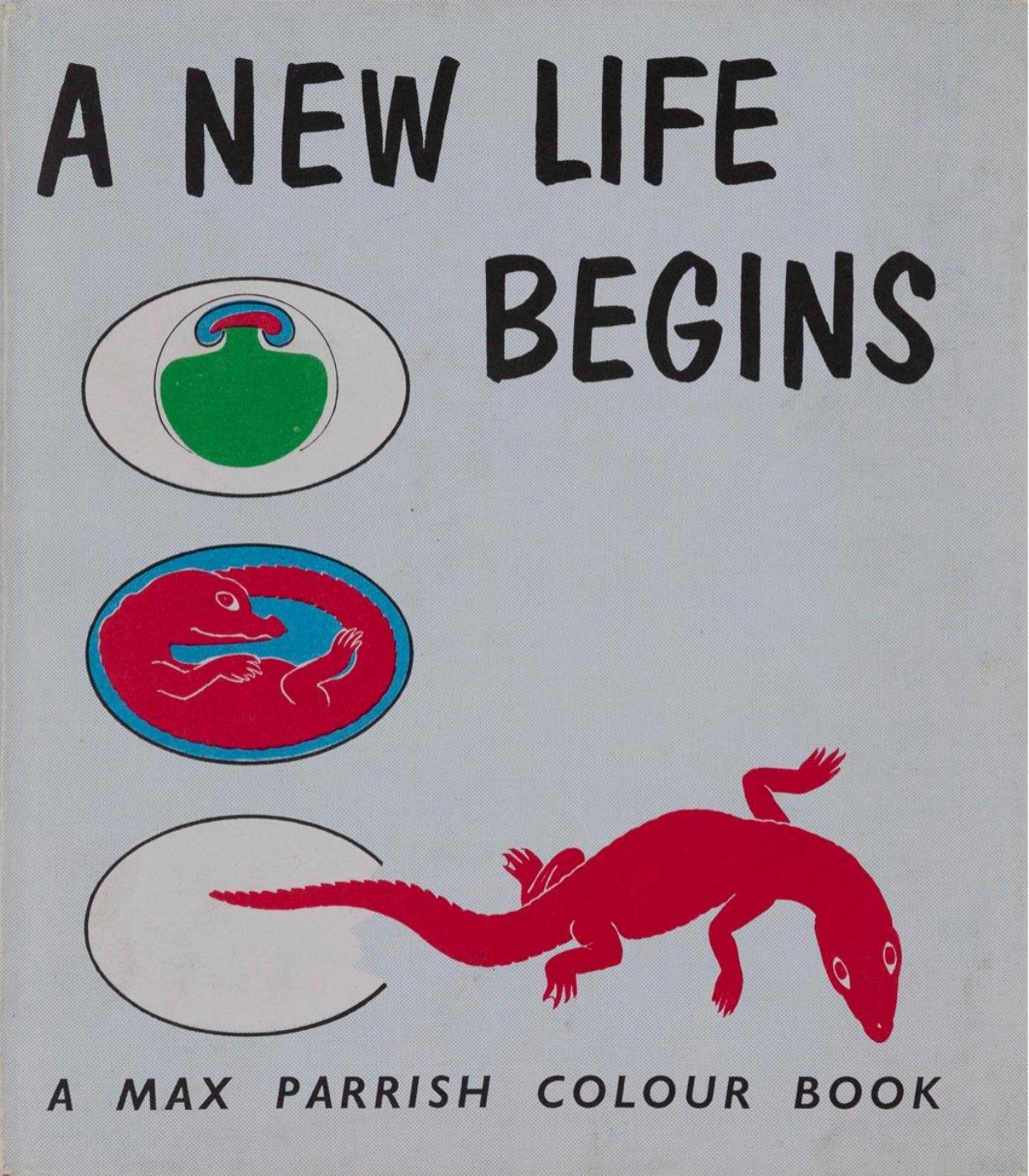
 Isotype Archive