Page text
A MAX PARRISH COLOUR BOOK
A FIERY FURNACE

UNDER THE SEA

is one of Nature’s many wonders: Under


the ground, too, many strange things


happen. In these pages you will find


why fountains of boiling water gush out


of the ground; how a gentle river be-                              ©
comes a raging torrent; what happens            TY OF READING
                                                nt of Typography
when the solid earth cracks and quakes;         > Communication

how the fire under the earth builds an


island in the sea, and why a putt of            & Marie
wind may start an avalanche crashing            surath
down the mountainside. These things,            otype

and many other wonders, are explained           l      s
                                                    ection
clearly and correctly in text, and pic-


tures in colour, which are easy to under-


stand. No doubt you have seen other


titles in this famous series; this is just as


interesting,
         just as exciting.


                                    Ee          2S55\
No text on this page.
No text on this page.
Land and Water
ISOTYPE PRINTED IN GREAT BRITAIN BY WOOD, ROZELAAR
THE      WONDER         WORLD       OF


Land and Water
  Marie Neurath


fe WES Gm = Remar   Max Parrish   London
LIST OF CONTENTS

A Fiery Furnace Under the Sea
                                                           onw
The Fiery Mountain Grows and Dies
Fountains of Boiling Water Gush Out of the Ground
How the Fire Under the Earth Builds an Island in the Sea
When the Solid Earth Cracks and Quakes                     12


The Thin Crust in which the Fire Begins                    14

The Shrinking, Wrinkling Skin of the Cooling Earth         16

The Great Upheavals which Made the High Mountains          18

High Hills and Deep Valleys Beneath the Sea                20


A Gentle Flow Becomes a Roaring Torrent
Rushing Waters Cut a Mile-Deep Canyon in the Solid
  Rock
Tall Towers which Stand Alone
How a Puff of Wind May Start an Avalanche Crashing
  Down the Mountainside                                    28

The Cave of Strange Pillars                                30


The Huge, Slow-Moving Rivers of Ice                        32


How Living Creatures Build New Land                        34
Deep Down Inside
A Fiery Furnace Under the Sea
Inside the earth on which we live, and inside the earth which is
under the sea, are red-hot rock and pressing gases. Sometimes
these are thrown out violently, through the mouth of a volcano.
orEach time a volcano bursts out, the liquid rolls down the sides
and cools into hard rock. Layers of ash and stone fall on top, and
the steam falls as rain. Slowly a cone-shaped mountain grows.
Can you count how many times this volcano has burst out?
6
The Fiery Mountain Grows and Dies


            LETS
            MEOcl


Inside a ‘dead’ volcano the long narrow shaft down the middle
is blocked with cold ashes and hardened rock. ‘Then rain may
form a lake in the wide mouth at the top. People can live on its
slopes, but a ‘dead’ volcano can suddenly burst into life again!

                                                               7
Strange fountains may be found near volcanoes. Steam and
water burst out from a hole in the earth. Then the fountain
dies down, and the water flows back into the hot rocks underneath.
Gush Out of the Ground


  Soon the water begins to boil again. Steam tries to press out, and
  finally it throws out the column of water and rushes out itself.
  Now it no longer presses, and the water can flow back.
How the Fire Under the Earth


When a volcano bursts into action under the sea, it can build
itself up rapidly until its top may rise above the waves. Then
red-hot rocks and ashes are thrown up and fall back in the sea.

10
Builds an Island in the Sea


                               RK

                               \    a


|     Such a volcano, when it is ‘dead’, makes an island in the sea,
      and plants and animals and people can live on it. Sometimes,
      we think, islands like this have disappeared under the sea again.

                                                                     cg
When the Solid Earth Cracks and Quakes
a
ae
Eyer ak
Sometimes a sudden crack below the
surface of the earth shakes the layers
around it so violently that it causes an
earthquake. This may knock down
houses, or even destroy whole cities.
When this happens, cracks can appear
in roads and fields, and the shaking is
usually worst nearest to the . place
where the crack first started.
a23
The Thin Crust in which the Fire Begins
Where are the fiery furnaces underneath the earth?
‘They are somewhere in the thin crust which makes the
top covering—not very far down compared with the
great distance to the middle of the earth. Nobody is
yet quite sure what makes these pockets of red-hot rock
and pressing gases.
The Shrinking, Wrinkling °
of the Cooling Earth
When an apple gets old and
dry, it shrinks and the skin
wrinkles. Many millions of
years ago, the earth cooled
down and shrank, and wrink-
les formed on its surface. We
know them today as moun-
tains and hills and the high
parts of the ocean bed. The
wrinkling went on for a very
long time, and the sea filled
the hollows. Plants grew and
animals lived on the dry land.
Small creatures lived in the
sea, and when they died, their
shells and skeletons helped to
make, after millions of years,
solid chalk. Then the earth’s
surface wrinkled again, and the
chalk became dry land. So we
find hills of chalk, made from
shells and skeletons of creat-
ures who had lived in the sea.


16
No text on this page.
The Great
Upheavals
which Made the
High Mountains

Sometimes the wrinkling of
the earth took place with great
force, and huge wrinkles were
formed. We know these as the
mighty mountain ranges of the
earth. For millions of years
strong winds and ice and snow
broke up the rock, and rain
poured down on the moun-
tains, and rivers and streams
ran down their sides. Gradu-
ally some of the softer rock was
washed away. Now, instead of
great folds, we find sharp
peaks, steep cliffs and deep
valleys; the soft rock appears
in some places, in others the
hard rock beneath has been
laid bare.


18
19
High Hills and Deep Valleys Beneath the Sea


             xe underwater world lies beneath the sea, but it
    is really like the earth’s surface on dry land. Near the
   land, the sea-bed slopes gently down. Then sometimes
   it falls suddenly away. Steep canyons cut into the
   slopes,   and valleys into the sea-bed; mountains and
   volcanoes    rise above   it.
No text on this page.
A Gentle Flow Becomes a Roaring Torrent


Flowing water wears away sofi rock more quickly than harder
rock. Where a river flows from harder to softer ground, a step
will be formed. As water rushes over this step, it digs deeper into
the softer ground and undermines the jutting ledge of harder
rock. Now this has lost its support and breaks away in pieces,
and the water falls sharply from a greater and greater height.

22
e
                                         2|
                                      _


What was a gentle flow, becomes a splashing, roaring waterfall.
Rushing Waters Cut a Mile-Deep Canyon in
Sometimes, to dry Arizona, come sudden, very
heavy rains. Long ages ago they fell on a rolling
plain. The rushing waters cut channels in the
earth, sweeping the dry, loose soil and rock
before them. More rains fell, and cut the chan-
nels deeper, for thousands of years. Now, the
main channel is a mile deep, with sides of
coloured rock: The Grand Canyon. Far below,
the torrent races, cutting deeper and deeper.
24
No text on this page.
Tall Towers which Stand Alone


Today the Devil’s Pillar towers high above the ground; once it
was a ‘dead’ volcano. But rain and wind gradually swept down
the rocks and earth on its slopes to the foot of the cone. ‘Then
only the harder rock in the middle was left behind.


26
These tall pillars stand alonein a woodland valley. Many, many
years ago, hard boulders rested on the level ground, Gradually,
the rains washed away the earth around them, but left the earth
beneath them firm. Now these strange, tall pillars remain.


                                                              aa


                                                             ih
How a Puff of Wind May Start an Avalanche
Crashing Down the Mountainside


  As snow falls on the high mountains, it piles up in thick layers.
  Under its heavy pete ice forms, settling in the cracks of
  the rocks and causing them to break and loosen. When warmer
  weather comes, the ice melts and soon the mass of snow rests
  only on slippery rock and loose stones. A puff
                                              of wind can set it
  crashing down   the mountainside, uprooting trees and knocking
  down fouies on its way.
\_ Cave of ed oa
mann
Rainwater can dissolve some
kinds of rock. As it drips é
through the roof of caves in
such rocks, some of the water 6
dries up, and rock is left be- 4 é
hind. More water drips from
this, more rock is left behind,
until after many years, long
pillars of rock hang from the
roof. Some of the water which
has dripped to the floor also
dries up, leaving rock behind,
and as more and more drops
fall, pillars slowly build up-
wards. Some even join those
hanging from the roof.
30
No text on this page.
The Huge, Slow-Moving Rivers of Ice


Under the great weight of ice on high mountains, water forms,
and sometimes whole rivers of ice slip slowly down. They scrape
away the rocks beneath, and push boulders before them. In war-
mer times the ice melts, leaving lakes and a pile of loose rock.


32
In some cold places, the rivers of ice reach down to the sea. At
the cliff’s edge huge masses of ice may break off and float away.
These great icebergs are often carried far out into the ocean;
much more is below the surface than you can see above.
How Living Creatures Build New Land


Corals are tiny creatures living in warm, sunlit seas. In great
numbers they attach themselves to rocks and grow hard, tree-
like structures. When they die, these structures remain, but
more settle on them. Slowly, a colourful, rocky forest grows.

34
Coral reefs form along the coast where the water is shallow.


On this new land, plants grow. Below, more corals form.
Deep Down
Inside


The crust on the surface of the earth is only 20 miles thick,
and we know little of what lies beneath it. But about 4000 miles
down, in the middle, it may be solid.

36
No text on this page.
No text on this page.
The Maz Parrish
    Colour Books
Here is a complete list of the books
which are like this one. You can
buy them through any bookshop
     anywhere in the world.

WONDERS OF THE MODERN WORLD

         BUILDING           BIG     THINGS

    WHAT’S NEW IN FLYING?
           INSIDE THE ATOM
MACHINES WHICH                  SEEM TO THINK
         SPEEDING          INTO SPACE

 A MESSAGE ROUND THE WORLD
     LET’S LOOK AT THE SKY
     FLYING THE                 ATLANTIC
                 iby    Manfred Reiss)

           ROCKETS           AND JETS

                        FIRE!
   RAILWAYS UNDER                        LONDON

I'LL SHOW        YOU HOW IT HAPPENS
    IF    YOU    COULD SEE                INSIDE


 THE WONDER WORLD OF NATURE

           LAND AND WATER
           TOO   SMALL            TO     S$

            STRANGE             PLANTS

             THE        DEEP        SEA

                 LONG          AGO

             THE SEASHORE
                       BIRDS

                       INSECTS

                  ANIMALS


   THE HISTORY OF THE WORLD

   HOW THE             FIRST       MEN        LIVED

 THE FIRST GREAT INVENTIONS
HOW THE WORLD WAS                             EXPLORED


    by Marie Neurath
Boards 7s. net. Cloth 8/6 net 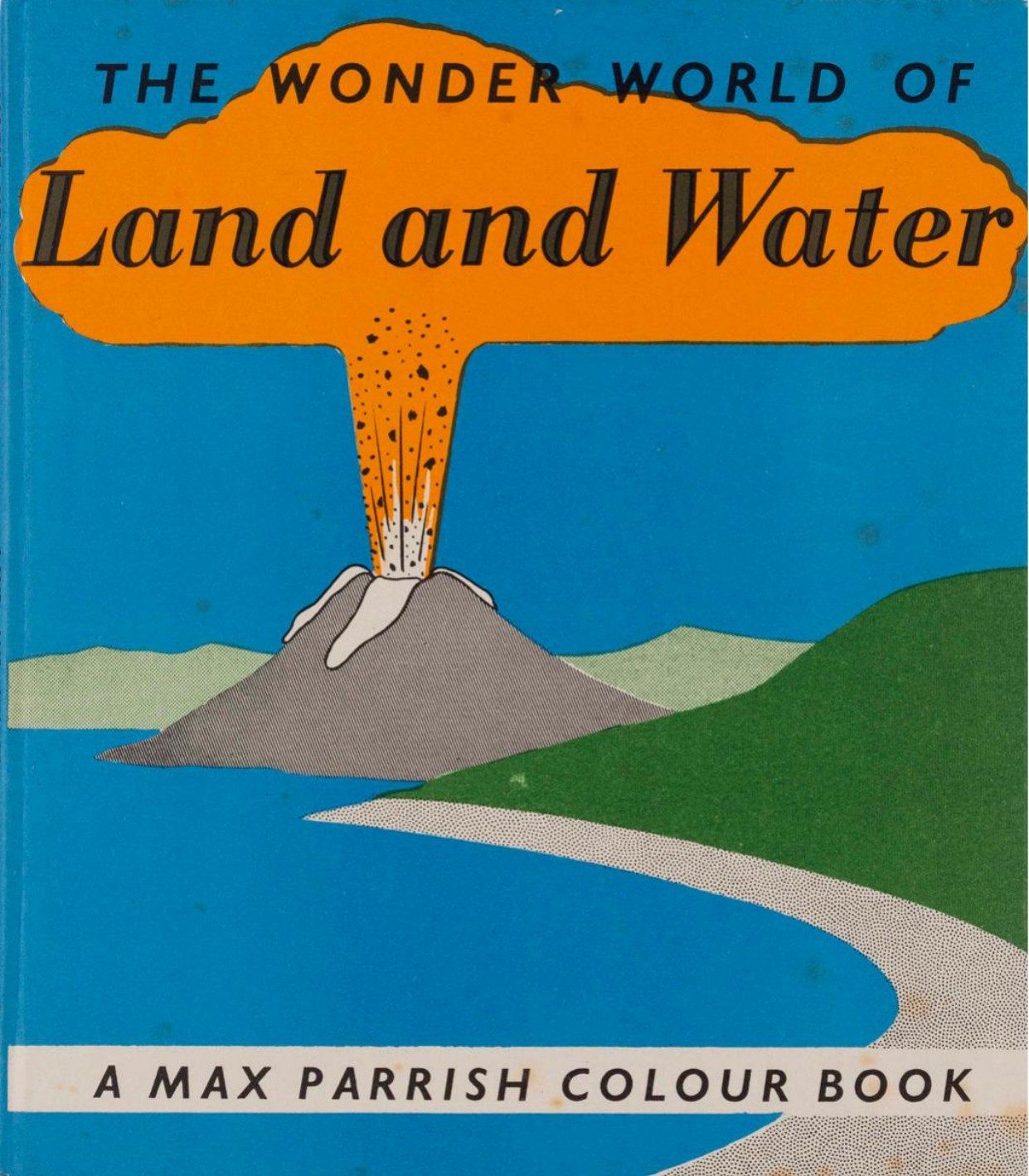
 Isotype Archive