Page text
No text on this page.
a      3.44

    eek


|   iain
            eee
                  i   y
                       g
                       rag
Contents
What this book is about by the Prime Minister ‘ =
Why the Volta River Project ?
WOAN
Why must it be now? :
How willit work? . : : =
What will the Gold Coast get out of it ? =
Wd
How else will the Gold Coast benefit ? FF
RNA
What will it all cost ? Nn
nN
Who is going to pay ?
Who gets the smelter profits ?
Se
WON
Can the Gold Coast do it ?
Why I favour the Volta River Project
by Professor W A. Lewis 31
Designed by the Isotype Institute Produced by Buffalo Books Limited
for the Department of Printed by Purnell & Sons Limited
Information Services, Gold Coast Paulton (Somerset) and London
Cover photograph 1 model of the Volta power stationWhat this book is about
by the Prime Minister
se PREPARATORY COMMISSION’S detailed reports on the Volta River Project have
now been printed and are available to the public for study. It is now for you,
the people of the Gold Coast, to consider these reports and to make up your own minds
about the project. We are not committed to the project in any way at this stage, and
I
intend to let everyone in the Gold Coast have every opportunity to make their own
decision about it.
The reports of the Preparatory Commission show that there are a great many
points of vital importance to the various parties to the project which will have to be
agreed before it can come into being. During the coming months I shall be considering
these points and discussing them with our prospective partners in the project. My aim
will be to reach a clear understanding of the basis on which negotiations can be con-
cluded finally between us.
When this has been done to my satisfaction, and when the people of the Gold
Coast have had every chance to weigh up the scheme, I shall arrange for the Legislative
Assembly to debate the project and the terms of the partnership proposed, which will
cover every aspect of construction and operation. It will not be until then, until I have
received a clear and unmistakeable sign that the country as a whole wants the project,
that I shall be in a position to tell our partners that we are ready to go into this scheme
with them. If we do go ahead, this will be one of the biggest construction projects
anywhere on earth.
This book is to help you, the people of the Gold Coast, to arrive at your own
conclusions. It accepts the findings of the Preparatory Commission that the project is
technically sound and economically feasible. It is designed to show briefly what the
Volta River Project could mean to the Gold Coast. But remember, however, that
before a satisfactory partnership can be negotiated it is possible and even probable
that all parties may wish to propose changes of major substance in the terms and con-
ditions on which the project, as contemplated in the White Paper, should be carried out.
The possibilities of the project are clearly very great and very far-reaching for the
people of the Gold Coast. In certain circumstances, it could be the beginning of our
industrial age. It could give many of us, whose interests would otherwise have been
concentrated on farming, the opportunity of working in a great industry, an industry
which will supply the world with one of the wonder metals of this age—aluminium.
Such a plan might well involve our country in sweeping changes and, if embarked
upon, must inevitably call for some sacrifice and restraint during the period of con-
struction. Although this period might be insignificant, when compared with the life
of the dam and power project, and although the sacrifices might be small, when com-
pared with the advantages ultimately to be derived from the project, it cannot be
denied that the country will have a very difficult decision to make as between the,present
and the future.
The Preparatory Commission has finished its work. It is now for the people of the
Gold Coast to decide whether they wish to open a new chapter in the history of the
Gold Coast. If they do; it is a chapter that can be written only by the people of the Gold
Coast themselves.Why the Volta River Project ?
Aes ARE THREE GOOD REASONS for the Volta River Project. One is that the
Gold Coast has huge deposits of bauxite, the ore from which aluminium is ex-
tracted. Another is that the flow of the Volta River offers a very large potential supply
of cheap hydro-electric power. These particular resources are not unique. Both cheap
power and bauxite exist elsewhere in the world. But the Gold Coast has them close
together —and that is the third good reason for the Volta River Project.
In the Gold Coast there is bauxite, from which aluminium can be made.
Bauxite is red earth. It does not change or deteriorate if left in the ground. But
there it is of no use whatever to the Gold Coast. It could be of some slight use if
mined and exported, giving returns in the form of employment and export duty. But
by far the greatest benefit for the people of this country could be obtained by processing
the bauxite into aluminium here in the Gold Coast. Not only would one of the mostvaluable natural resources of the country be utilised, but the coming of
a great industry
would bring a new life and a new outlook to thousands of people in
the Gold Coast.
River
LT
Much water flows to waste down the Volta
into the sea every year.
Dam Lake
A dam at Ajena could store the water, which could be used
to turn
Power
Station
Y// Yi Va Va
machines to make electricity. This is called hydro-electric power.
It would also enable the potential power of the Volta River to be utilised,
because
the smelting of aluminium requires enormous amounts of electricity.
The flow of the
Volta, if dammed and used to turn turbines in a power station,
would generate an
immense amount of electricity—about one hundred times as much as
the Electricity
Department now produces for the whole of the country,WUD
tk FFSGGSSTST FFFFFTTTTG
SEFSEEEISS FFFGTTTTTT
SESSSETITE FITTEST
SESFESSSTT FEFTTTTTTT
LEELA LEELA ELE
The dam and power station could make 100 times as much electricity
as the Electricity Department now makes for the whole Gold Coast.
But although all that power is there waiting to be used, the Gold Coast has a
problem in finding a way to develop it cheaply. To build a dam and power station
would cost some £60 million. This would have to be paid for by the sale of the power
produced. The more power that can be produced and sold, the cheaper the power
will become. All the towns in the Gold Coast now supplied by the Government,
however, could consume only one-hundredth part of the power available at Ajena.
If the country wished to develop its power regardless of expense, these consumers
would have to bear the cost of all the rest of the power, whether used or not. This
would make the power not cheap, but very expensive.
Consequently, unless the Gold Coast finds a new and very large consumer of
electricity, the potential power of the Volta cannot be developed for the benefit of the
country, because the cost can never be recovered from existing consumers. There is,
fortunately, a new and large consumer in sight: the proposed aluminium smelter.
An aluminium industry can consume all the power the Volta can produce. It is the
only industry in the world, in fact, which can make the Volta power project an economic
possibility.
Another vital economic factor is the cost of bringing the bauxite and power
together. True, the bauxite, which lies in the hills between Aya and Yenahin, is onlyCOT.
Bauxite =
—
; Electric current
qe
A
To make aluminium out of bauxite, an enormous amount of electricity
is needed. A smelter could get the power from the Volta power station.
about 200 miles from the place on the Volta where the power will
be produced.
Elsewhere in the world the bauxite and power are thousands of miles apart.
This
gives the Gold Coast an advantage, provided that the cost of railway freight
over the
shorter distance can compare favourably with the cost of the much longer journey
by sea.
It can now clearly be seen that the economic production of aluminium is the heart
of the Volta River Project. That the bauxite and the power of the Volta can only be
utilised together, and not independently of each other. That although other
vast
works are involved, and thousands of people will be affected who will have
no direct
connection with the industry, the entire scheme stands or falls by whether aluminium
made in the Gold Coast can be sold competitively on the markets of the world.
This question of cost and price dominates every aspect of the project, and
will
continue to do so throughout the life of the scheme. The Gold Coast’s advantages
of nature depend absolutely upon holding the price of power and transport to the very
minimum. It cannot be repeated too often that the Volta River Project will work
only if the combined cost of the rail transport for bauxite and the Volta hydro-electric
power is no higher than it is in other countries.There is enough bauxite to supply the smelter for many generations
- until your grandchildren have grandchildren, and long after that.
he
Bauxite to be mined wl, Aluminium production
1975 3K
1985
1995 &,
2005 ;
2015
2025
2035
2045 _—— |
2055
2065Why must it be now ?
(= ARE ALSO THREE GOOD REASONS why no time should be lost in considering
the Volta River Project.
The first reason is that aluminium, because of its lightness
and strength, 1s at
present one of the most desired metals in use in industry. World demand
for alum-
inium is constantly increasing, and present supplies are far short
of requirements.
As a result of this, there are many projects under examination for stepping-up
world
production of aluminium — notably in India, where plans have already
been announced
for more than doubling the existing aluminium industry.
The Gold Coast has a great opportunity of getting in quickly, even after allowing
for the long construction period. This opportunity is likely to lose its value if
alumin-
ium producers are forced to increase output elsewhere or seek new sources of
supply.
Furthermore, all over the world there is a constant search for still lighter
and stronger
metals. It is not impossible that just as centuries ago iron ousted bronze as the
metal
in everyday use, so some new metal might replace aluminium as the wonder
metal of
the age. If this happened the Gold Coast’s bauxite, if it had not been used, could
become valueless.
The second reason is that over the past twenty years the trend of construction
cost has been steadily upwards, and shows no sign of levelling off. Consequently,
the
longer the delay in building the dam and power station, the more they are likely to
cost, and the higher will be the price of power - which will in turn affect the economics
of the aluminium production. It must not be overlooked, however, that today rates of
interest are very high, and that the rising cost of construction might be offset to some
extent if rates of interest were to fall. A hydro-electric power station uses no fuel.
Once it is built, and there are no further construction costs to meet, it continues to
generate power as long as the rain falls and the rivers flow. Therefore the cheaper
it can
be built in the first place, the cheaper the power will be for future generations.
The third and final reason is a very important one, and one that vitally concerns
the whole country. More than anything else, the Gold Coast needs to give its people
more and different jobs to do, to provide a greater variety of products. Only then can
it escape from its present dependence upon cocoa for its income, and expand its exports
in other directions.
Today the Gold Coast is a relatively prosperous country. Its people can buywhat they want from other countries. The Government has been able to put aside
some £75 million for development in the past 5 years. The balance of trade over the
The Gold Coast today makes more money from exports than it spends.
C—Oee
Imports Exports |
IAALEAAAALLEEEAE
1951
IALLAABAALEEABAL
1952
vs AA ABEAAALEEEEELE
vw PPAR EALAAAAAARAAAEL
last few years - that is, what the country gets for selling things abroad compared with
what it spends on buying goods — has been very favourable:
Most of its income from exports is from cocoa, whose price goes up
and down. This is a very risky situation for any country to be in.
cocoa
Temata |I |
ve AAERBEEAL
vs ALE AAREE |
RL
oo (PE BARAREEIt is obvious that for any country to depend upon one item for two-thirds of its
overseas income is a risky state of affairs. A serious drop in cocoa production, or a
heavy fall in world demand, could be a disaster for the Gold Coast. Any means of in-
creasing other exports would therefore be a form of insurance against such a catastrophe.
The Volta River Project will go a long way towards providing that insurance. Jf
today’s prices for aluminii are ined, the eventual output of the smelter
planned for the Gold Coast will, when sold overseas, equal the value of the whole of the
country’s ‘other exports’ put together.
That is what the Volta River Project could mean to the Gold Coast. That, and
more. The existence in the Gold Coast of a great and prosperous aluminium industry
should not only benefit those directly employed by it, but should also stimulate many
other activities and raise the general level of spending power throughout the country.
Now let us see just what the project involves, what precisely the Gold Coast
will get out of it, what it will cost, and how it will be paid for.
(e] £10,000,000
Aluminium, in time, will earn as much for the Gold Coast as all its
other exports put together. This will make the position much safer.
Future aluminium exportsHow will it work ?
NUMBER OF DIFFERENT OPERATIONS are required to bring the bauxite and the power
together and produce the aluminium. All these operations and processes will
take place in the Gold Coast, and will therefore employ and benefit the people of the
Gold Coast. These are the things which go to make up the Volta River Project:
A new township1. A mine at the site of the bauxite deposits between Aya and Yenahin. Here
the bush and top-soil will be scraped away, and mechanical shovels and excavators
will scoop the red bauxite out of the hills. The mine should give employment, income,
and training to people for as long as the bauxite lasts — at least 200 years on present
plans.
2. A new township near the mine to bring modern housing and living conditions
to the hundreds of mine workers and their families.
3. A dam and power station at Ajena, on the Volta, 70 miles from its mouth.
During the construction period of7 years, up to 5,000 workers will be employed here
and taught new trades and skills, and their families housed and educated. During
the operating period the power station will provide some employment, and earn enough
money from the sale of power to pay for itself in 80 years. After that the power project,
ee
(6) A new town
New industries (10) Ree
ee
eewhich will be owned by the Gold Coast from the start, will be entirely free from debt.
The full income from sales of power will then be available to the Gold Coast. Money
will have been set aside from the sale of power to maintain the machinery as new,
and it will continue to produce power as long as there is water to operate it.
4. A lake about 3,000 square miles in area and 230 miles long stretching from
the dam back into the Northern Territories. This could provide vast new fishing
grounds, a means of cheap transportation, and water for irrigation purposes.
5. A smelter on the plain near Kpong. During construction this will employ many
thousands of workers. At full production it will be, apart from Government, the
largest single employer of labour in the country, with a pay-roll of some 9,000 men.
6. A new town to house the smelter workers and their families. This town may
eventually have about 50,000 inhabitants, and right from the beginning will be a com-
plete modern community, with schools, health services, piped water, water-borne
sewage, electricity, and public transport.
7. Railways to carry the bauxite from the mine to the smelter, and the aluminium
from the smelter to the coast for export. The extension of the existing railway network
by the construction of 83 miles of new track, and the operation of up to six bauxite
trains every day, will give employment to hundreds of people in the Gold Coast.
8. Roads to open up the construction areas and to by-pass the Volta lake. This
extensive road-building programme will give much employment and greatly assist
the flow of traffic and trade through the Gold Coast.
9. A new port at Tema to handle the import of raw materials used in the smelter,
and the export of finished aluminium. The construction of this harbour, vitally
necessary in any case for the natural development of the country, is already providing
income and training for many people.
10. Opportunities for many beneficial developments quite apart from the actual
manufacture of aluminium - general industrial development, lake fishing, irrigated
farming on the plains, lakeside agriculture, health control over a large area, water
transport, and the potential growth of other industries particularly requiring water
and cheap power.What will the Gold Coast get out of it ?
Te BENEFITS THE GOLD COAST CAN GAIN from the project are of many different
kinds. There is the direct gain in money, which will form a completely new source
of revenue for Government, and there are many indirect benefits, all of which would
create additional wealth throughout the whole country.
As the aluminium is to be sold abroad, there would be, at present prices for alumin-
ium, an increase of about £35 million a year in the value of Gold Coast exports. Not
all of this, of course, will be distributed in the Gold Coast. Some of it will have to be
used to buy the raw materials imported for the smelter, and to renew the plant and
equipment from time to time. Some of it will go to pay the smelter company’s share of
the profits. But after all these necessary deductions, the country might have a net
increase in income of about £12 million a year, divided between the Government and
private individuals.
This is how the money received from aluminium sales will be divided.
ond navtacve, SQOQOQOQOQOOOOGO
and manufacture
UK cocmment” O@@OOCCOCOCO
U.K. Government
Te cow coast @OQOQOQOOOOOOO
to the Government to the people
Private incomes could increase by between £3 million and £4 milliona
year through
‘wages paid to the thousands of people employed by the bauxite mine,
the smelter,
the railways, the power project, and the port. Many people would also
benefit through
the increased demand for goods and services of all kinds which this new income
will
create. The overall effect would be to stimulate the internal trade and
prosperity ofthe
country.The Government’s income could increase by perhaps £84 million a year. By con-
trast with personal incomes of the people directly employed by the project, this Govern-
ment income will be spent for the benefit of everyone in the country, on such vital
developments as schools, hospitals, water supplies, and rural electrification. The
Government’s income would arise from these sources:
TAXATION of the smelter company’s profits, in the same way as company tax is
levied on all commercial undertakings in the Gold Coast. |
prorits from the Gold Coast’s shares in the smelter. These profits are divided
Minerals duty Import duty
sanszaanuvany
es
ro,between the shareholders after the company tax has been deducted.
MINERALS DUTY on all the bauxite used to make aluminium.
INCOME TAX on money earned by those em ployed on the project who are liable to pay.
IMPORT DUTY on the goods which the additional incomes will enable people to buy
from overseas.
INTEREST On the Government’s investment in the dam and power station.
) All these types of income add up to a great deal. But there are many indirect
benefits which add up to a great deal more in the long-term development of the country.
Income tax Taxation Profits Interest
>
et
=
eo
ae
SY 2 OR OEPHow else will the Gold Coast benefit ?
a THE BRITISH AND THE CANADIANS the Volta River Project will mean, first and
foremost, aluminium. To the Gold Coast and its people, it must mean much more.
It has often been suggested that the creation of the Volta Lake wilk harm the
health of the people living round it But a detailed medical survey by leading inter-
national experts in tropical diseases shows that the project can in fact help to raise
the level of health of thousands of people in the area. The Preparatory Commission
envisages a Volta River Authority, which will control the construction of the project,
and which will have a special medical department. This department will use modern
drugs and insecticides to see that no increase in malaria, bilharzia, or sleeping sickness
takes place round the lake.
The great opportunity for improvement concerns river blindness. The threat
of this terrible disease will actually be reduced by the lake. Recent scientific surveys
have proved conclusively that the small fly which transmits river blindness can breed
only in river rapids or tumbling water. The formation of a deep still-water lake will
The fly which carries river blindness breeds only in tumbling water.
x
R
The deep, slow-moving Volta lake will cover up its breeding-places.eliminate such breeding-places all the way from
Ajena to Yapei, some 230 miles away
in the north. This cutting-off of the lower Volta
from the source of the disease in the
north will also provide an Opportunity of
wiping out river blindness in the Ajena-
Kpong area, where the incidence is now very high.
Special supervision of the health of the lake-side
population will continue after
the construction of the dam has finished. Houses
will be sprayed with insecticides,
bush cleared, and boatmen and fishermen inoculated.
This planned health control
will not only maintain the level of health of the people
round the lake, but actually improve
it in places. n the long run it will provide
the world with valuable new information
on the health implications of water-project development
in Africa.
There are other benefits which no one but the
Gold Coast will share. One is a
great increase in one of the vital necessities of life
- food. This may sound strange, in
view ofthe fact that a large area of the land will
be lost to the country by flooding - but
it is a fact that more food can be produced from an
acre of water than from an acre of
the type of land which is involved here.
Fish is one of the most important sources of protein
in this country. The Volta
lake will provide as much fish as is now caught along
the whole sea coast, or as much as is
now caught in all the fresh-water lakes, ponds, and
rivers in the interior.
It is estimated that the lake will yield at least six tons
of fish per square mile of
water. The whole lake could therefore produce
some 18,000 tons of fish a year. Valued
at only 6d per Ib., which is well below the current
price, this represents an additional
income to the country of more than £1 million per year.
This will more than make up
for the local foodstuffs which will be lost through flooding
of the land.
This fresh supply of fish will be particularly accessible
to the north, and give the
northern peoples a valuable addition to the diet, which
is at present very low in protein.
It will also help to reduce the need for the country
to import expensive foreign fish.
In 1954, for example, the Gold Coast paid out £2
million for 10,800 tons of smoked
and tinned fish.
The Volta lake will provide as much fish as is
now caught along the
entire coast-line, or in all the freshwater lakes and
rivers inland.Water from the Volta lake could be distributed through canals and
ditches to make new food crops grow on the dry plains near Accra.
Another great benefit reserved for the Gold Coast alone is the prospect, for the
first time, of irrigated farming. Water from the Volta dam will be available for dis-
tribution through a system of canals and ditches. Experiments are already in progress
to see what conditions would be required to turn the barren Accra plains into fertile
farmland. At Kpong, crops such as rice, sugar, cotton, and tobacco are being tried
to see which will grow best under irrigation in local conditions.
There will also be opportunities for a completely new type of farming along the
edges of the Volta lake. The level of the lake will fall during the dry season and un-
cover areas which could grow rice or other crops requiring swampy or moist ground.
The lake will be lower in the dry season than in the rainy season.
un
eg tg bd fly de aay Phat ef pupae
gly ey ee ly
hay eM
Yyy
.
~hCetC LLMYY! LMM WH Ds
We
On the uncovered edges of the lake, rice and other crops could grow.
BzYj,yyzd_.
YyYYYUE)WHYjLoaz
Yyyy
YyjjYY Ys,
Wy
yy
YYThese overall gains in farm production will more than make up for the loss of
land through flooding, because the area the lake will occupy is, fortunately for the
Gold Coast, poor land and hardly used. Out of the 2,310 square miles which will be
permanently submerged, for instance, Jess than 75 square miles is ever under cultivation
for food at any one time. Some cocoa farms on the slopes round the lake will be
flooded, but the amount of cocoa they produce today is very small—less than one-
hundredth part of the total Gold Coast crop. And what is more, nearly half those trees
which will be lost are already so old that they will have finished bearing by the time
the water covers them.
These effects on farming and fishing are, of course, long-term effects, and will
take many years to be felt. But there will be an immediate demand for food by the
large numbers of workmen and their families in the construction areas. At Ajena
and Kpong, for example, there will be a new population comparable with that of.
Cape Coast, now the fourth largest town in the Gold Coast. These people will have
to be fed, which means that much more food will have to be produced locally. The
Government wilt have to stimulate this production by every possible means, by en-
couraging farming cooperatives, teaching improved farming techniques, and granting
funds for feeder roads.
Apart from its power and irrigation prospects, the lake itself will become an asset
to the country, providing opportunities for cheap transport, particularly to and from
the north. Even those people it displaces will not suffer loss. It will be recalled that
the Prime Minister promised that no person would be worse off as a result of flooding —
and in many ways they will be better off.
A
ae
Some villages will be covered by the Volta lake, but the Government
will help people with money and advice to build themselves new houses.
In the first place they will be compensated for loss.of land and property, and in
addition they will be assisted by the Government in building new and better houses
and villages. There will be an opportunity for the first time to construct properly
laid out villages according to modern town-planning ideas - and in the case of Kete
Krachi, a completely new town for several thousand people.One more immense benefit to the Gold Coast from the project, and to the Gold
Coast alone, will be the training of labour. At the peak construction period the scheme
will employ 15,000 workers, and about 10,000 when full operation is reached. A
high proportion of these workers will be trained in various skills, many of them
for supervisory jobs. In effect, the project will provide scope for industrial training
ona scale much larger than anything seen in this country before.
The chances of advancement in the smelter for Africans with the necessary ability
will be high, because it is obviously to the advantage of the aluminium companies
wherever possible to replace overseas workers, who are expensive to maintain away
from home, with local workers. Those workers who are trained for construction
work and who-do not become permanently employed will of course be available for
other development projects once the scheme is complete. This will mean a valuable
addition to one of the most vital requirements ofa growing country: its labour force.
Finally, the Gold Coast will have a supply of power from the project for its own
use. This is a matter which will require careful consideration, however, as it has many
aspects.
The smelter must be supplied with an agreed minimum amount of power for its
operation. The balance of the power produced will be available either for the smelter
or for the Gold Coast. This might be a considerable amount, perhaps twenty times
as much as is now consumed in the whole of the Gold Coast from Government supplies.
As the cost of the dam and power station is to be repaid by the sale of power, it follows
that the more power the smelter uses and pays for, the more it will contribute towards
the cost of the power project.
As the smelter will not, however, be supplied with all the power, the rest of the
cost will have to be carried by the Gold Coast. So the more power the Gold Coast reserves
for itself, the more it will pay towards the cost of the power project.
Of course, if a// the power reserved by the Gold Coast can be sold to domestic
and industrial consumers, then the proceeds will cover the Gold Coast commitment
towards the cost of the power project. But if the Gold Coast reserves more power
than can be sold, then that part of it which can be sold will have to bear the whole
cost of the reserved power - which will make it more expensive to the consumer.
So the Government must decide how much power it can sell before it decides
how much to reserve. The prospect of selling power to all towns and villages in the
Gold Coast is almost out of the question. This is because it is very costly to carry
high-tension current overland, and expensive to reduce it to a strength suitable for
household use. Domestic sales of power may well have to be confined to the triangle
Accra-Tema-Kpong. But that this does not mean that no thought will be given to the
needs of the rest of the country. There are, however, a number of highly technical
problems to be solved before a general plan for the whole of the country can be
developed. It is with this end in view that a United Nations survey team has been
20asked to explore the various possibilities of electrification.
There is a further possibility, however, of disposing of the power, and that is to
encourage other industries to start up on the Kpong plains. A plant for making
fertilisers or chemicals, for example, requires power and a plentiful water supply, both
of which will be available. This prospect will be carefully investigated by the Govern-
ment before any decision is made about the amount of power to be reserved.
The important point to realise is that the smelter can use a// the power generated
at Ajena. Its production is limited only by the supply of power, not of bauxite. The
higher the smelter’s production, furthermore, the cheaper it becomes to make the
aluminium - which is to the Gold Coast’s benefit. Therefore the Government must
consider very carefully whether it will do better to reserve more power than it needs,
in case it is required, or to let the smelter have as much power as possible, to make
additional profits which will be shared with the Gold Coast. And the people of the
Gold Coast must understand that the more power that is reserved, the more expensive
it will be for the country, unless it can all be sold.
Aluminium Profit
NSN 200000006
eee are Uae eeeeccee
f__Vv__ Ys 0@OOOOE 00000680
(OE tN EERO S 200060080
120,000 tons
NG eee bes
(aaa eae Vine NG e@
(ENTE Ne, ee
SN a a ee
p San aia Vom NG ee
aN NS ee
(LIN RENE NGS Cr)
210,000 tons
The more aluminium that is produced and sold abroad, the more profit
there will be to divide between the partners operating the smelter.
This does not mean that the country will get no benefits in electricity from the
Volta River Project. The survey of the scheme included the possibility of building
other dams higher up the Volta. At least one practicable site has been found and
investigated, and the engineers’ report suggests that it is quite feasible to develop power
there. All this power, when produced, would be available for the Gold Coast.
Finally, the profits which the Government will make from the Volta River Project
can be utilised for, among other things, the financing of whatever rural electrification
schemes the United Nations survey team recommends.What will it all cost ?
T= ORIGINAL AIM OF THE VOLTA RIVER PROJECT was to start production at a level
equal to 80,000 tons of aluminium a year, and to increase as soon as possible to
120,000 tons a year. For the purposes of this book a production of 120,000 tons a
year has been taken as the basis for calculating costs.
After that the aim was to increase production to the target output of 210,000 tons
a year. This will take many more years to reach, but it will be to everyone’s advantage
to work towards it as quickly as possible. This is because costs of production fall
steeply — and profits go up — as output increases.
This is the cost of starting the project, and of reaching full output.
Power project
million and £4 million later
£63 million and £9 million later
fe Gs Public works
22The Preparatory Commission has taken special care to get the best possible
estimates of what it would cost to build the project. These estimates have been checked
and checked again independently. The engineers’ costs for the dam and power station
and railways have even been specially examined by a firm of chartered accountants,
who have endorsed the figures.
Experience with projects of this kind all over the world, however, and the general
world trend of wages and prices, has caused the Preparatory Commission to suggest
an allowance of between 40 and 50 per cent to some of the estimates. This would
be particularly prudent in view of the very long construction period — between 7
and 8 years - compared with that of similar projects elsewhere.
This addition is, of course, only provisional, and assumes the continuing economic
stability of the Gold Coast. Unexpected rises in internal costs or serious inflation
could push the final estimates even higher. The present estimates, based on 1955 prices,
are used throughout this book as being the only definite figures on which to work.
But in considering the investment of the various partners in the project, the possibility
must not be forgotten of such an increase.
The cost of public works, in which the Gold Coast is primarily interested, is less
liable to be affected by this possible increase. This is because a great part of the work
has already begun —- Tema harbour and township, for example — and is therefore less
likely to suffer from rising costs in years ahead.
Even at today’s prices, however, the above estimates amount to a very great deal
of money. Who is going to find it? And how much is it going to cost the Gold
Coast ?
The question now is: how much will each partner pay?
?
(
Smelter
Public works
23Who is going to pay ?
l AKE PUBLIC WORKS FIRST, which would be solely financed by the Gold Coast
Government.
All public works will be built and paid for by the Gold Coast itself.
This money, which will have to be found by the Gold Coast, falls into three
distinct categories: direct commitments arising from the Volta River Project, other
possible investment as a result of the project, and development expenditure, such
as Tema harbour, which is allied to the project but not dependent upon it.
Direct commitments include railways (£17 million plus £1 million later), a possible
£1 million additional cost of resettlement of people displaced by the Volta lake, and
general expenditure on new townships (£14 million, plus £24 million later).
Possible expenditure arising from the project includes fisheries (£4 million at
first, and up to £5 million later) and housing (£1 million, and £34 million later).
Allied development includes Tema harbour and township (£30 million) and roads
and bridges (£9 million).
24Based on the division of investment proposed in the White Paper of 1952 (which
will not, however, be finalised until after the decisive negotiations between the parties to
the project), the total Gold Coast investment required for 120,000-ton production
would be £75 million, with £12 million to be found later. This includes all public
works, and the investment in the power project and the smelter. The total Gold Coast
investment could be larger if the Government reached an agreement to invest more
in the power project and the smelter.
Assuming a requirement of £75 million, the Gold Coast has already provided
£33 million of this. There is, furthermore, another £6 million available in the Develop-
ment Funds. There remains therefore £36 million to be found, with a further £12
million to be found later — both these figures being subject to increase should the Gold
Coast invest more in the power project and smelter than was suggested in the White
Paper.
Now for the investment in the power project, based on the division mentioned
in the White Paper:
Rise
in cost
The cost of building the Volta dam and power station will be shared
between the U.K. Government and the Government of the Gold Coast.
The estimated total cost of the power project has risen by £14 million (from £54
million to £68 million) since the White Paper. The provision of the extra cost will be
settled at the final negotiations. It is worth remembering, however, that, as far as the
Gold Coast is concerned, money put into the power project will produce less return
than any other form of development that the Government cares to undertake.
25The United Kingdom Government was prepared to invest in the power project,
to be repaid over 80 years, because in return it would get the bulk of the aluminium
output For this it would pay sterling, instead of the dollars it now pays for Canadian
or American aluminium.
No matter who pays for the power project, however, the dam and power station
become fixed assets of the Gold Coast as soon as they are built. In 80 years, when the
sale of power has repaid the U.K. Government’s loan, the Gold Coast will own the
power project debt-free, with all the power it produces. And it will not have kept
locked up in a very expensive rock-pile a lot of money which it could have more profit-
ably used elsewhere. Economically speaking, therefore, the Gold Coast will be wise to
invest as little as possible in the power project.
The investment in the smelter is another matter altogether, one of crucial import-
ance to the Gold Coast — and to the aluminium companies. Using the White Paper
The U.K. Government will
have a non-profit-making share in the
smelter. The profit-bearing shares will be divided between the Gold
Coast and the aluminium companies. The final division is open to
agreement.
division of cost and the revised figures in the Preparatory Commission’s reports, the
investment ofthe partners would be as shown in the diagram on page 25.
The investments proposed in 1952 may be varied at the final negotiations. One
thing is definite, however. The U.K. Government will simply draw interest on its
investment in the smelter. It will have no part of the ‘equity’ shares, which draw the
profits.
26The profit-bearing equity shares will be divided between the aluminium companies
and the Gold Coast, in proportions yet to be settled. And this is where the question
of ‘control’ of the project comes in, a subject which has been much in the public mind
in the Gold Coast.
To begin with, the entire project will be controlled by the Volta River Authority.
This will be a statutory body, consisting of a chairman and six members. Four members,
a majority, will be Africans. The fifth member will represent the aluminium companies,
and the sixth will represent the U.K. Government. The chairman will in the first
instance be appointed jointly by the Gold Coast and U.K. Governments.
The Volta River Authority will control and administer all aspects of the project,
including the spending of money, during the dynamic stage of construction and early
operation. Even after the smelter begins operating, the v.R.A. will continue to control
the power project. Therefore the source of power for the project will be in Gold Coast
hands from the very beginning.
It may be thought that the only way to safeguard completely the interests of
the Gold Coast is to control the smelter itself, by holding the majority of the equity
shares. But Professor W. A. Lewis, Professor of Economics at Manchester University,
and an economist of world repute who is advising the Gold Coast Government on the
Volta River Project, points out that it is a question of what you want to control, and
why. The answer is to find a formula which will enable each partner to control those
matters to which it attaches the greatest importance.
The Gold Coast, for example, has no reason to oppose the aluminium companies’
control of technical operations at the smelter, nor of their marketing policy. The Gold
Coast has the same interest as the aluminium companies in wanting maximum pro-
duction at the lowest cost. Such matters can therefore be safely left to the aluminium
companies, who have shown themselves to be most efficient and expert producers.
The Gold Coast Government, states Professor Lewis, may wish to exert some
control over labour policy at the smelter, in such matters as Africanisation. But this,
he points out, is not a question of share-holding, but simply of legislation.
The vital point on which the Gold Coast has every right to insist is that it gets
a fair share of the profits of the smelter. But even this, Professor Lewis stresses, is
not primarily dependent upon the percentage of equity shares held.
The Government’s share of the profits is. determined primarily by the rate of in-
come tax, which is under its sole control. The question whether it would pay the
Government to invest its own money in buying more shares in the smelter company
is a separate issue, and depends partly on how much profit is expected to be left after
taxation, and partly upon how much of its money the Government wishes to invest
in this way.
27Who gets the smelter profits ?
Bz DISCUSSING THE DIVISION OF PROFITS, let us see how the smelter profits
are arrived at. From the selling price of the aluminium all the costs of making it
must first be deducted. What is left is gross profit.
From each £1 of gross profit must now be made a big deduction, and one that
goes solely to the Gold Coast: company tax. At the present rate of tax this would
amount to 9/- out of each £1 of gross profit.
The 11/- which is left is net profit, to be divided between the equity shareholders
in the smelter company - that is, the aluminium companies and the Gold Coast Govern-
ment and, eventually, private Gold Coast shareholders.
The exact dividend cannot yet be given, because the division of shares has still
to be finally negotiated. But as an illustration let us work it out on the basis of the
White Paper proposals, which foresaw an eventual Gold Coast holding of 20 per
cent of the shares.
This would give the Gold Coast 2/2 out of the 11/- net profits, and the aluminium
companies 8/10. If the Gold Coast’s share of the profits is added to its share in
company tax, the total, on the White Paper basis, comes to 11/2, compared with the
aluminium companies’ share of 8/10.
So that the Gold Coast will make more money out of the smelter than the
aluminium companies who run it, even on the basis of the White Paper. This income
is, of course, in addition to the side benefits mentioned earlier and the revenue earned
by the railways and the port.
The Gold Coast itself has neither the technical resources nor the specialised
knowledge to manufacture aluminium. If it wants to make aluminium from its
bauxite, it must seek the assistance of commercial enterprises of international reputa-
tion, It must recognise that such enterprises will always insist on holding the con-
trolling interest in the shares in the smelter. No commercial company will accept
the principle of an outside interest holding a majority of shares, and therefore being
in a position to dictate its operations.
But, as Professor Lewis has pointed out, the Gold Coast’s chief concern is to
obtain a fair share of the profits - and to do this it does not need to hold the majority
of shares. Its biggest source of income from the smelter will be in the form of company
tax. The more successful the project, therefore, and the bigger the gross profits, the
28more tax the Gold Coast will collect. The rate of company tax is more important to
this country than the percentage of shares held in the smelter.
Including company taxation, which the other partners do not share,
the Gold Coast can have the largest share of the smelter profits.
Company tax Net profit
29Can the Gold Coast do it ?
7s SURVEY OF THE WHOLE RANGE of the Volta River Project, with all its possi-
bilities and implications, suggests that the vital question for the Gold Coast to
decide is not whether it can or should afford to do it, but whether it can afford Nor to.
There is no doubt, given a determined national effort, that the money and the labour
can be found, even though it will necessarily mean slowing down other development.
The returns from the project should now be clear. They are many and diverse.
Put together, Professor Lewis points out, they will bring the Gold Coast
a larger income per head of population than any other industry or enterprise in
which the nation’s labour and money could be employed.
And there is the long-term prospect of industrialisation, of which the Volta River
Project will form the first step, bringing to an end the country’s present utter dependence
upon the unpredictable cocoa crop.
So the time for weighing-up has come. The benefits to the other parties are not
concealed. The British Government will get interest on its investment, but no profits.
Much of the aluminium will be sold in Britain, which will ease the dollar drain on the
sterling area, to which the Gold Coast belongs. The aluminium companies are in
business, and will expect to make a profit. Professor Lewis points out that such an
industry elsewhere in the world expects to make 15 to 20 per cent on investment,
and can hardly be expected to make much less in the Gold Coast.
All this goes to show how the partners in the project are dependent upon each
other, and not in competition with each other. The Volta River Project is not a struggle
for the value of the Gold Coast’s bauxite, but an agreement to pool knowledge, skill,
and resources to share its benefits.
It is up to the people of the Gold Coast now to decide for themselves just how
much it means to them. An unprécedented amount of time and care has been spent on
investigating this project. It can never be said that the facts were not available.
The Gold Coast is not yet committed in any way to the Volta River Project. It
is completely free to decide. None of the other partners can move one step without
the agreement of the Gold Coast Government. The Gold Coast Government, as the
Prime Minister has said, will take no action without the full support of the people.
And no agreement will be put into effect without the assent of the Legislative Assembly.
It is for the people to decide.Why I favour the Volta River Project
By W. A. Lewis, Ph.D., B.Com., M.A., Professor of Economic and Social Studies,
Manchester University
I AM VERY PLEASED to have this chance to commend the Volta River Project to the goodwill
of the people of the Gold Coast. The project kindles the imagination, by its size, by its
challenge to the forces of nature, and by its dependence on the latest that science has to offer.
1 could well understand it if some people were carried away by the emotion of national pride
to wish to have this project carried out on Gold Coast soil as one of the first achievements of a
free people.
My approach to the project, however, has been more pedestrian than this. My main con-
cern has been to know how much the people of the Gold Coast will get out of it, in pounds,
shillings and pence. My reason for commending the project is simply that I think it will pay
the country handsomely in the material sense. I have asked a number of critical questions on
this subject, and here are the answers, as far as can be foretold at present:
1. How are the proceeds going to be divided between the parties?
This depends partly on various matters which are still to be negotiated. However, on the
basis of the arrangements set out in the 1952 White Paper, this is how the proceeds would be
divided up. Of every pound (£1) of aluminium sold, 6/5 will pay for imported raw materials
and machinery, 6/- will go to foreign shareholders and bondholders (including the U.K.
Government), expatriates employed in the Gold Coast will receive 10d., and the Gold Coast
people, including their Government, will receive 6/9.
2. Is the return to overseas interests putting up the capital excessive?
I assume for these calculations that they put up £143 million, and receive £9,630,000 a
year exclusive of tax, when the project is in full production. This averages 6-7 per cent on the
investment. The U.K. Government is assumed to get 5 per cent on its investment, and the
shareholders in the aiuminium smelter will get 8-4 per cent on their investment, after paying
Gold Coast tax. These seem to me very modest rates, bearing in mind the sums and the risks
involved. The calculations may be a bit conservative, but for every extra £1 which the share-
holders may receive, so also will the Gold Coast Government receive an extra £1 in tax plus
its share of the profits.
3. What is the return to the Gold Coast Government for its investment?
How much the Government should put up I shall discuss in a moment. Assuming the
pattern laid down in 1952, [ put the cost to the Government of works undertaken specifically
for the project at about £39 million. This includes that part of the road, railway and harbour
programme which is chargeable to the project, plus certain uncompensated expenditures, like
the cost of building police stations in the new townships. Against this, its revenues should
increase, as a result of this project, by about £8} million a year, when the smelter is in full
production.4. How much money should the Government put up?
It is open to the Government to press for a larger share of the investment in the dam or in
the smelter. It woyld not be wise to seek to invest more in the dam. This investment involves
locking up money over 80 years, for a return not exceeding 5 per cent per annum. The U.K.
Government is willing to put up most of this money, on condition that three-quarters of the
aluminium will be sold for sterling for the first 30 years. Since the U.K. will in any case be the
principal buyer, this offer should be accepted. Investment in the smelter would be more
profitable, but when account is taken of the amount which has to be paid in income tax in any
case, it is not so profitable as all that. I think the right attitude is that if the Gold Coast
Government expects to have spare funds over the next 30 years or so which it could afford to
tie up in aluminium shares, it should press for a larger investment in the equity of the smelter.
Otherwise, this issue is not very important.
5. Could Gold Coast labour be used more profitably in other ways?
The most profitable use of labour in the Gold Coast at present is in growing cocoa. On
present calculations the average person employed on the Volta project will add to the incomes
of the Gold Coast people (including taxes) at least twice as much as the average person en-
gaged in the cocoa industry. There is no other use of Gold Coast resources which could
increase the incomes of the people by even half as much. Moreover, the increase will be in the
form of exports, and will be a most useful insurance in case the cocoa industry should cease
to be as profitable as it now is.
6. Should this project have priority over other developments?
It follows that the answer is ‘Yes’. But it so happens that the work which has to be done
for this project will also help other kinds of development. The roads, railways and harbour
works will stimulate all sorts of other activities. The new lake will add to the fisheries poten-
tial, and will also facilitate irrigation. The dam will provide additional electric power for the
rest of the economy. Food production will be stimulated in the vicinity of the project, and
agriculture is expected to benefit from increased demand. So the project will strengthen the
rest of the economy, as well as providing additional income directly.
My enthusiasm is not without reserve. The Gold Coast Government must enter into the
forthcoming negotiations with a hard head, and do some stiff bargaining on a number of
issues, some large and some small. All I want to say now is that this is a good project from
the Gold Coast point of view, just as it is from the points of view of the aluminium companies
and of the U.K. Government. Let us all hope that compromises are reached to the advantage
of all parties. The Gold Coast is very fortunate to be endowed with bauxite and with this
magnificent opportunity to produce electric power in close proximity. It is a wonderful asset
to have, and it should be set without delay to contribute to the country’s prosperity, and to
the opportunities for further development.TOGOLAND
ie
Bauxite mine
Tema (new port) 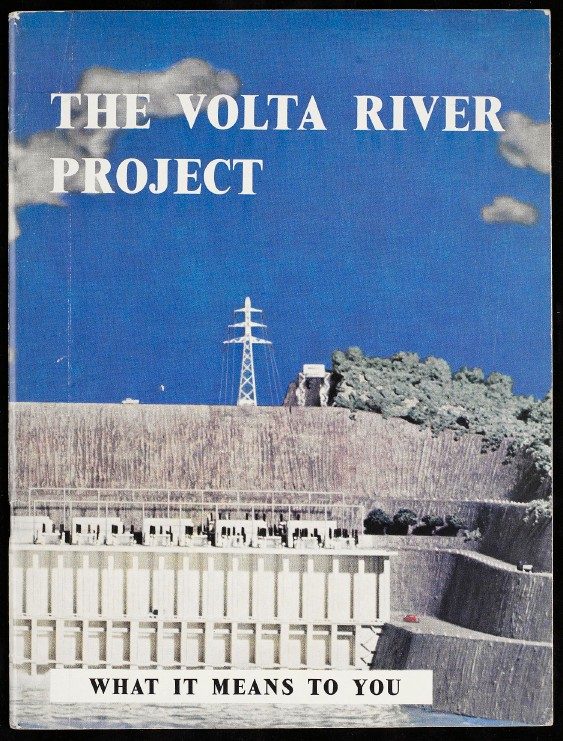
 Isotype Archive