Page text
No text on this page.
DO
                               OSS nn eEe_~-”--~-~-~—-—~—~S~S~Sst


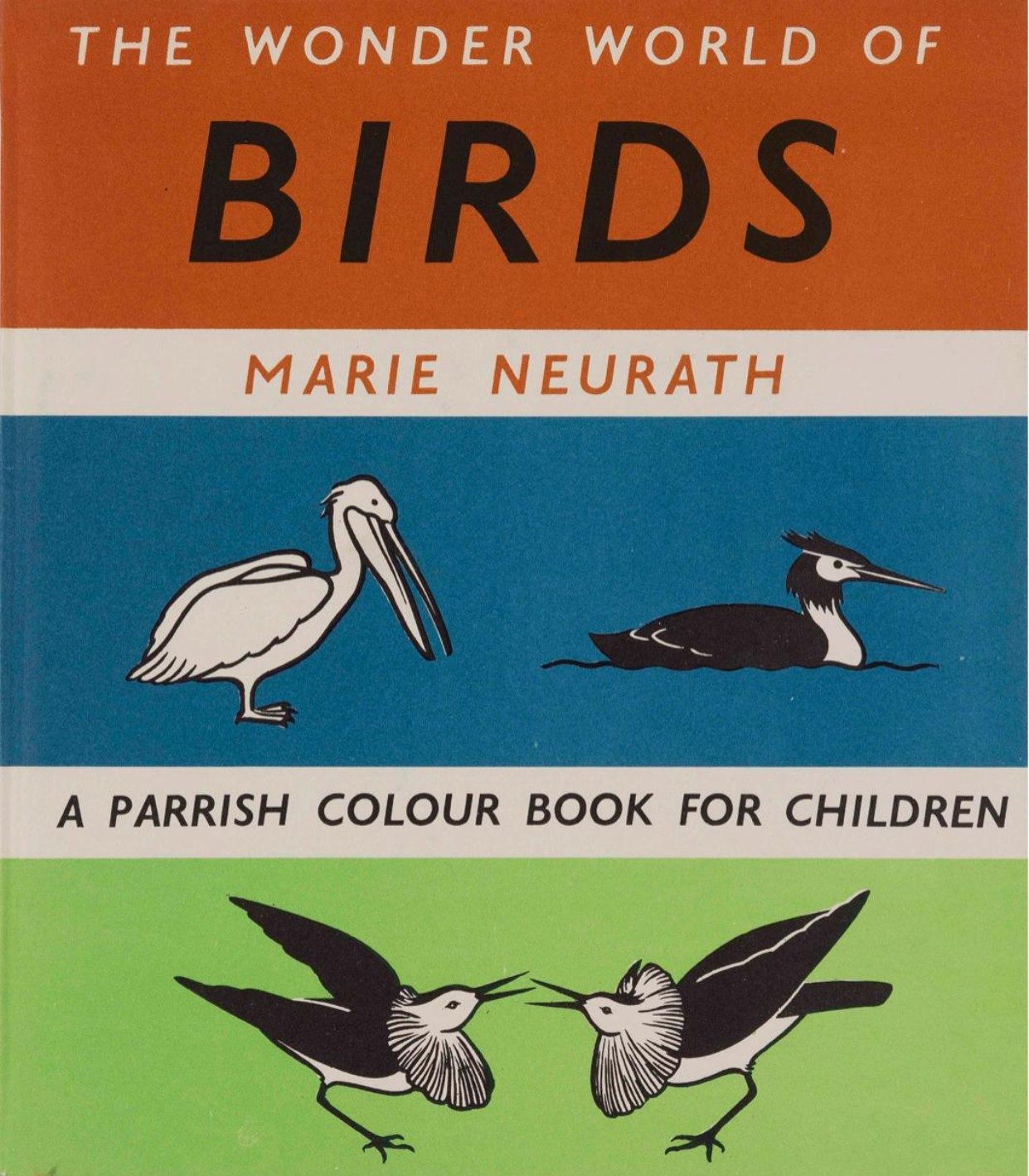
 THE WONDER WORLD
 OF BIRDS

 by Marie Neurath


Birds,     with      their lively singing,
bright      plumage           and     graceful
movements            are     a_never-failing
source of interest and curiosity to
children.        A    walk        through     the
spring woods or a visit to the zoo
releases     a       flood    of    questions.
Where      does       this   bird    build     its
nest? How does that one sleep at
night? Where               have    those    birds
been all the winter?

The answers to questions of this
kind are given here in the form of
true stories about            the lives and
habits of birds of many                    lands:
These birds with no nests hatch
eggs on their feet—The tailor bird
stitches a cradle of leaves—The                      oe   a
fishing    party       of    the    pelicans—
When       the       cockatoo       watchmen
sound the alarm—The umbrella
town of many nests—Preparing to
fly six thousand miles— When the
hedge       sparrow           hatches         the
cuckoo’s egg.

Marie      Neurath’s         simple,       direct
text   and gay         one-idea-at-a-time
pictures appeal            not only to the
children;         soundly          based      on
thorough research, they will also
satisfy the discerning parent.


ALL AGES


See back flap for other titles


                                            6s.
No text on this page.
T
         go =
            i __.W.. =
                       e.


 Tl
 0)

 by


 Bir
 bri
 mo

 sou

 chi
 spr

 rele
 Wh
 nes

 nig

 bee

The
kin
true

hab
The
exe:

stite

fishi
Wh
sour

tow!

fly s
hed
cuch

Mar
text

pict
chile
thor
satis


ALL


See b
THE WONDER WORLD OF
BIRDS@ ISOTYPE SET AND PRINTED IN GREAT BRITAIN BY GRAPHIC
REPRODUCTIONS LTD LONDON — COPYRIGHT 1953 Max Parrish London
LIST OF CONTENTS


The Biggest Birds of All                             5
Beaks which are Slender, or Strong, or Sharp         6
How Each Willow Warbler Wins a Place of His Own      8
Choosing a Mate to Share the Nest                   10
The Dance of the Ruffs                              12
The Umbrella Town of Many Nests                     13
The Tailor Bird Stitches a Cradle of Leaves         14
Painters and Decorators: The Bower Birds            15
He Shuts up His Family to Keep it Safe              16
These Birds with No Nests Hatch Eggson Their Feet   18
When the Hedge Sparrow Hatches the Cuckoo’s Egg 20
Protecting the Young Ones Before They can Fly       22
Hatching the Brush-Turkey’s Eggs                    24
Some Strange Ways in which Birds Sleep              25
Diving Birds which Live by the River                26
The Swift-Flying Falcon which Soars and Swoops      28
When the Cockatoo Watchmen Sound the Alarm          30
The Fishing Party of the Pelicans                   32
Preparing to Fly Six Thousand Miles                 34
Arrows of Geese that Fly from the North             36
The Biggest Birds of All


     {


Not all birds are like those we see and hear in our gardens. All
over the world strange birds with strange habits are to be found.
Look at these ostriches. They cannot sing and cannot fly. They
are swift, powerful runners, twice as heavy as a man.
Beaks which are Slender,
or Strong, or Sharp
Humming birds are often
no bigger than a man’s finger.
With beaks like curved needles
and long, slender tongues,
they can sip the nectar
from flowers, just as bees do.
The woodpecker uses
his chisel-like beak
to bore holes into
the solid wood of
growing trees.
With head upside-
down, the flamingo
fills his beak with mud.
Through spines in his
beak, he sifts out
small water creatures
which he can eat.Here is another bird whose bill The macaw’s powerful beak
sifts food, Can you see why it can crush nuts which a man
is called a spoonbill? would needa hammer to crack.
In its big, striped beak, the The vulture’s beak can strip
puffin carries several fish at the flesh from a dead animal’s
once to feed its young ones. bones and leave them white.
How Each Willow Warbler Wins a Place
                           of His Own
                            In March the willow warbler
                        =   cocks   leave   sunny   North
                            Africa and fly northwards to
                            a bushy thicket in Europe.


          That part he claims
          as his own. His song
          warns   the   rest   to
          stay out or he will
          fight them.
The willow warbler hens,
which begin their long jour-
ney a little later than the cock
birds, arrive a week or so
afterwards.
WD VARY \
Wade y} iy tt)
Me \ itingcrnsfi
A;
She flies to his part of the wood and
becomes his mate. She builds her nest
nearby and lays her eggs; then she and
her mate rear their family together.Choosing a Mate to Share the Nest
In early spring the cock and hen treecreeper live in separate
trees. The cock sings his song to the hen.
After a while
the cock bird
searches for grubs.
When he finds one
S he takes it to the hen.
If she accepts, the two will become mates and live together.
10a>
From a distance, the male and female grebe wave their crested
heads at one another. Then they swim closer and touch beaks.
Sometimes they twine their long necks together.
The cock frigate bird puffs his
chest out big, to show what
a fine fellow he is, -
and waits for a mate.
IlThe Dance of the Ruffs
Ruffs have large outdoor gatherings at
whi ch the males show
off their fine ruff-feathers, The females, or
reeves, stand by.
ms,
W
W
W =
The males s pread their ruf
f-feathers and make rushes at
each
oth er. Some are driven away. Th
e others win the reeves.
12The Umbrella Tow n of Many Nests
The sociable weaver birds of
South Africa build huge um-
brella-shaped “towns” in the
boughs of a tree. When they
have made the “ thatching”
from bits of coarse straw, they
tunnel into it from beneath to
make many separate nesting
chambers.
13The Tailor Bird Stitches a Cradle of Leaves
The tailor birds of India and
China make a cradle of leaves
to hold theirnests.
They choose
two or three big, fleshy leaves
hanging side by side and make
a row of tiny holes round the
edges with their beaks.
4
Then they find bits of hairy
stuff and draw them through
the holes to hold the leaves to-
gether. Each “ stitch” has to
be made separately. Inside the
cradle they build a soft, woolly
nest for their eggs.
uaePainters and Decorators: The Bower Birds
Using twigs for the base and long sticks for the walls, these
Australian bower birds are building their playground.
When it is finished, they paint the inside with juice from berries
and arrange shells, flowers and feathers round it.
He Shuts up His Family to Keep it Safe
The hen hornbill of India makes her nest and lays her egg inside
a hollow tree. The cock helps her to seal up the entrance witha
plaster made from the bark of a tree and saliva, leaving only a
small slit. Then, for weeks, he searches for food and feeds his
imprisoned mate through the slit.


16
When the young one hatches out it is helpless, and the mother,
who loses most of her feathers, cannot protect it. But inside
the prison no harm can come to it from monkeys or hungry
snakes. When the time comes to break down the “wall,” the
father is thin and tired, but his family are well fed and safe.


                                                                  17
These Birds with No Nests Hatch Eges on
Near the icy South Pole, where they live, there are no twigs or
grasses for building cosy nests. The mother penguin rests her egg ga
on her webbed feet where it is covered by a pouch of skin and
kept warm. Father also takes his turn at carrying it.
The young birds, hatched out at the end of winter, are small
with soft fur-like coats. But, well fed by their parents, they
soon grow and get their first fluffy feathers. By next winter they
are big and strong enough to face the biting cold.
18
——————————— leTheir Feet
sea, using their wings as paddles and steering with t heir tails.
SS)Protecting the Young Ones
Before They can Fly
When her owlets are in
danger, the mother owl takes
them one at a time in her
strong beak and, flying silent-
ly across the night sky, carries
them to a safe place.
Although small, the mistle-
thrush will attack and drive
away any bird which threat-
ens her young ones, even if it
is as big as this magpie.
22The ringed plover builds a
rough, almost flat nest on a
a | lonely part of the seashore.
gat
y Her chicks are coloured
if Wy . rather like the rocks and
IR f stones about, and it is not
a \/ WE. 3Y at all easy for an enemy to
S\/. oo Te see them. \
\/ eee a
Sl oe e®
a °be @ePe ene is ex. VV
- 2° \/
@ °-\/ oe &
When the dog is far from the nest she flies back.
23Hatching the Brush-Turkey’s Eggs
pile
Brush-turkey cocks, which
live in eastern Australia,
build a huge pile of dead
leaves and grass where the
hens lay their eggs.
Once the eggs are laid, the
hens fly away. The cock
birds cover the eggs and
stand guard over them,
leaving the heat of the pile
to hatch them.
When the shells break, the
young chicks already
have
their feathers. Within an-
hour or so they can
fly
away.
28Some Strange Ways in which Birds Sleep
The little grebe falls asleep
floating on the water.
Head tucked under wing, the
wren sleeps perched on a twig.
The treecreeper presses beak, The marabou goes to sleep
toes and tail to a tree-trunk. standing on one leg.
2)Diving Birds which Live by the River
Below the bough where the young kingfishers sit is a tunnel.
There they were brought up in a nest made of fishbones.
When they grow up they make their own tunnels, and live
always by the river. They watch the water patiently, then
suddenly dive. In a flash they catch a fish and are out again.
26
These two grebes both carry their young ones on their backs.


A falcon comes, and both must protect their chicks. The crested
grebe, neck held over her babies, hides in the reeds. The little
grebe dives like a submarine, her chicks clinging on.
The Swift-Flying Falcon which Soars and


                              These young peregrine falcons
                              live high up on a mountain. Their
                              mother, from a tall rock, watches
                              over them. Their father, back
                              from hunting, brings them food.


When they first try to fly, a fall from such a great height would
mean death, Sometimes the mother stays nearby, watching.


28
Swoops y,-)
/ The grown falcon is a master of
flight. He soars high above his
prey, then swoops, killing it in-
stantly with his sharp claws. After
it has fallen he retrieves it and
carries it off.When the Cockatoo Watchmen Sound the
—Alarm
A few fly there as watchmen to make sure there is no danger.
The watchmen, seeing all is well, have given the “safety ”’ call.
They sound the alarm and the flock fly off to the wood.
The Fishing Party of the Pelicans


 Pelicans fish in groups. Wading shorewards in line, they drive
 the fish into shallow water and catch them in their beaks.


32
The pelican stores many fish
in the big pouch of skin under
its beak. The baby, not big
enough   to go fishing, feeds
from the pouch.


                            33
Preparing to Fly Six Thousand Miles
In June, the parent swallows built
their nest under the eaves,
In July, their first family of chicks are learning
to fly.
The parent birds go back to
their nest and rear a second
brood of chicks.
The first family, almost grown
up now, fly away.
34The second brood stay with The first, with others, then fly
the parents until September. _ off to warmer lands.
x
y3 397
Mile
On
x?
ail
s x
MS xa
FHM x
ae sl 14 A | ae
Parents and babies go later. They may fly 6,000 miles (from
Alaska to Brazil, or England to Africa) with only short rests.
3D)Arrows of Geese that Fly from the North
Soon after the swallows go, arrows of wild geese fly south from
the Arctic. Wherever we live there are interesting birds for us
to watch, all the year round.
36
No text on this page.
No text on this page.
The Wonder World
of Nature
To the unsophisticated eyes and
minds of children the living world
around us is a world of wonder.
The animals, birds and insects of
field and hedgerow, the trees and
flowers of wood and garden, the
shells and fishes of the seashore all
evoke the sharpest curiosity. The
Wonder World of Nature series is
designed to foster this interest and
delight by relating many of the
marvels of living things in words
and pictures that young children
can understand and enjoy.


ALREADY PUBLISHED


THE WONDER WORLD
OF ANIMALS

Teeth that fell trees, paws that
build    dams—A           lonely   giant
becomes a servant—The strangest
animal of all—Forest animals too
young to climb—The battle to be
leader of the herd—It looks like a
mouse, it flies like a bird.


THE WONDER WORLD
OF INSECTS

The     parasol    ants    which   grow
mushrooms--Keeping            the cattle
on an insect farm—The weaver
ants    whose     children   spin—The
still watch of the fighting mantis
The insect lamp which shines in
the dark     The slave ants which
feed their masters.


Ready soon

THE WONDER WORLD
OF THE SEASHORE
 Isotype Archive