Page text
ate
EeVISUAL HISTORYOF MANKIND


    “LIVING.
        “BOOK THREE


      TN THE
    VOR LD


 -PARRISH SS     :    sy
ro
A NEW DEVELOPMENT IN VISUAL EDUCATION
j
The Scottish Report on Primary Education (1946) says of visual education:
‘It depends not so much on direct photography as on the animated cartoon, and
sets out with the purpose of teaching a definite lesson: not background illustration —
but essential education. It studies the psychological approach, makes use of
all possible devices of sight and sound to arouse and maintain interest, and
ruthlessly excludes every irrelevant detail: The skill of the most inspiring and
imaginative teachers can thus be allied to all the devices of the modern technicians
to produce a teaching medium of extraordinary power that may be made available
in every class-room in the land.” : ;
The Visual History of Mankind is an attempt to translate these words, written of
the film, into the printed book. The picture-language, Isotype, was designed. by
its originators for this educational purpose. Clarity and simplicity is its chief aim.
All irrelevant detail is omitted, the same symbols occur over and over again so
that the reader quickly recognizes them, colour creates interest ‘but is used always
with meaning and not merely as decoration, attention is paid to arrangements
which will present easily remembered patterns. This new instrument is used to
make statements and tell stories which are not simply of background value but
are themselves an essential part of the education of modern citizens.
i The books are intended for use at the stage, described in the Report, when the
pupils are “jn a position to realize the patience and genius of our early ancestors in
making those inventions and discoveries upon which the later developments of
civilized life are based . . . to follow with intelligence and interest the great stories
of civilization, such as the story of the ship, the wheel, the road, the alphabet,
lighting, weights and measures, law and ordet’’: Teachers will, of course, use the
charts in the light of their own experience. Some will use them as texts, study
them with their pupils, help them by questions to find the right words to describe
what they see, and use the blackboard to summarize the lesson. Others will tell
stories, illustrating them with film strips and other pictorial material as visual
“aids, and then turn to the books to drive home and expand what has been dealt
with. Still others will continue to use the ordinary story books and use the charts
‘as geography. teachers use an atlas. But all of them will find'in these books an
opportunity to “study and experiment”, in the words of the Report, “with a
technique of teaching which seems likely to be of revolutionary importance”.
4THE THEME OF THESE BOOKS
1
BOOK
LIVING IN EARLY TIMES
In the long, slow ages before written history began, men learned gradually to make use
of their natural environment. They found out how to make, keep, and use fire; how
to extract metals from their ores; how to shape tools. The hunters of animals domesti-
cated some and lived in partnership with them. The gatherers. of herbs and berries
discovered agriculture. In river valleys, like that of the Nile, fields were cultivated and
villages grew up. By the side of lakes, in houses built on piles, small groups of men
lived more securely, than their ancestors. Instead of furs, woven clothing began to be
worn; in the huts crude rushlights and torches glowed at night; on the rivers the first
boats were‘to be seen. ;
BOOK 2
a
LIVING IN VILLAGES AND TOWNS
These great fundamental discoveries made it possible for human beings to live in larger
groups. Families gathered into villages and towns for mutual help and protection.
: This made possible division of labour with the consequent advantage of specialization.
\. But it set problems of social organization which it has taken centuries to solve.
ROOK 3
YING IN THE WORLD
Ye, as towns and cities grew, they extended their influence and rule over the sur-
\g countryside.’ Later, the civilized regions came into contact with one another
sommerce and through war. Improving techniques speeded the process of
\munication and led to the exploration of the whole planet, now seen to be
yo slowly and painfully, mankind is learning the lesson that secure and
comes not through the enslavement of human beings “but from the
Qitation of natural resources.i
WITH ISOTYP2’s 47
COMPLIMENTS (>
VETS FAL He TS) 50 Ray O F MOV NP TR a NP jp
sleeve Ne (Geen Ni TE EW, Oe Re see)LIVING IN
HONORARY EDITOR
LANCELOT HOGBEN
PUBLISHED BY ADPRINT LIMITED LONDON COPYRIGHT 1949
PRINTED IN GREAT BRITAIN BY JARROLD & SONS LTD NORWICH ENGLANDTHE WORLD
PREPARED BY
OTTO AND MARIE NEURATH ozrectors oF tHe tsorype INSTITUTE
d, A. LAUWERYS PROFESSOR OF COMPARATIVE EDUCATION - UNIVERSITY OF LONDON
WITH 20 CHARTS IN EIGHT COLOURS BY THE ISOTYPE INSTITUTE
& CO LTD
A MAX PARRISH BOOK — 1 otros: oe rau woleonn Lonbon Wet. SYDNEY - WELLINGTON
AR a yaurons: G G. HARRAPfost, OF CONTENTS
How to Use this Book Pages 6 & 7
The Beginnings of Trade Chart 1
The Horse and the Wheel Chart Z
The People of the Steppes Chart 3
Travelling on Land Chart 4
Travelling on Water Chart 5
Civilizations of Early Times Chart 6
Civilization Circles the Earth Chart a.
The New Spain and the Old Chart 8
Hieroglyph and Alphabet Chart 9
| The World Learns to Write Chart 10The Great Religions Chart
Spreading Knowledge Chart
The Fruits of the Earth Chart
Britain’s Food Chart
Changing Power and a Changing Landscape Chart
A Century of Inventions Chart
Man Fights Malaria Chart
Population Grows Chart
The Great Empires Chart
The Right to Vote Chart 20
Things to do Yourself Page 48
Some Books to Read Page 49
HOW                  TO            USE                THIS                 BOOK

The three books that make up the Visual History of Mankind are not like the history

books you usually read.     They tell different stories, and tell them in a   different way,
using pictures instead of words.


We do not tell you very much about kings and queens, battles and wars, Parliaments
and Courts. Instead you will find here stories of how ordinary people have lived in the

past—the clothes they wore, the food they ate, the way they worked, and how they
travelled by land and sea. If you look at Charts 13 and 14, for instance, you will find

that your dinner has an interesting history.

The pictures we use have all been made in a Special way. As you look at them you will

see that certain drawings, say for “man” or “horse” or ‘‘wheat”, are used again
and again, just as words are in an ordinary book. These drawings, called Isotype
symbols, are all kept as clear and simple as possible so that you can recognize them at

once every time you see them.      As a   result, they can be put together to tell a story or
to give interesting information.


We hope that you will like the bright colours we use, just as we like them, but their

main purpose is to help make the meaning of our charts clearer and not just to make
them more attractive.    For instance, if you look at Chart 2 you will see that everything
connected with the wheel is red, and everything connected with the horse is black.

In fact you will soon find that everything in the Isotype picture-language has a mean-
ing.   All details that do not play a part in the story are left out.   So, in Chart 2 there
is no need to show that some horses were fatter than others, because that is not part
of the story. In Chart 14, on the other hand, it is necessary to show that some pigs
were fatter than others, because it is part of the story.


There are no hard-and-fast rules about how you should read these charts, but it is
usually best to look first at the chart as a whole. Next you can look carefully at each
symbol and each colour until you see what it stands for.    Then look for the connec-
tions between them until you can see what the whole chart has to say. Then try to
answer the questions. We are sure you will think of many more than we have given.


If two or more people look at the charts together, so much the better.      Interesting
discussions will spring up, and you will soon find yourself seeking for more infor-
mation in other books. On page 49 we have made a list of some books which you
may find useful.


There is no need, by the way, to look at the charts in the order we have placed them.
Just as you can look at the maps in a geographical atlas in any order and build
geographical stories around them, so you may build many stories around our charts
and, if you wish, look at the last before the first.


If you turn to page 48 you will find we have suggested a number of things you might
like to do yourself, including making some of your own picture stories. Whether you
do these things or not, we hope you will enjoy reading this new kind of book, and will
find our stories interesting and easy to remember.


                                                                    The Editors
The Beginnings of
Trade RA AAA
AA AAS
AAA AA AA
AAA AAA AOA,
Look at the top picture first.
1
Put your finger on the seas ; the forest;
the grassland.
2 A RA
Where was amber found? Where was
it taken to? How was it carried?
What are the men receiving in ex-
change for amber?
These men do not travel only for
A Vee
aaah. AA ed
trade. What other reasons might
make them want to travel?
What hunting weapon is the second AAA.
man in the forest carrying? Fi
What is the second man in the grass-
land doing?
Now look at the bottom picture.
7
Are there more or fewer articles
being taken from place to place than
in the top picture?How are they being carried?
What is coming from the forest?
What from the mountains?
What kind of article is made from
these two things?
1
What is received in exchange for the
products?
12
Name someof the things which come
from hot countries.
il3}
Which of these is brought from
across the sea?
Describe the difference between the
boat in the top picture and that in
the bottom picture.
15
Name someof the things which come
from cold countries.
Do the men in this picture travel
mainly for trade?
Chart |America Mediterranean
The Horse
and the Wheel
1
In which part of the world were carts 3000 |
with wheels first used? B.C.
In which part of the world were carts
with wheels not used until a.p. 1500?
2000 |
3
How many years were there between
the earliest use of the wheel and
A.D. 1500?
In which part of the world were 1000
horses first ridden by man?
5
How many years ago did this happen?
Did man use the horse to pull carts
before he used it for riding?
|| |
What does man wear to ride a horse?
8
1000 |
When did man first start to wear
these garments?
In which part of the world were
horses first tamed? in Mesopotamia Central Asia China 10
Name the parts of the world where
horses were found and used before
RY
they reached Northern Europe. Find
the places on your atlas.
ie 11
From which part of the world did
America get horses?
12
How were they taken there?
Yn 13
When did wheels first have spokes?
14
What were wheels like before they
—
had spokes?
15
Name a country where wheels still
do not usually have spokes.
va) 16
I | | From whom did the people of Europe
learn to wear trousers?
17
In what countries were carts intro-
duced before horses?
mt| Chart 2The People
of the Steppes vv vvuvunv ]
vvuvuvvvuvvuVvUvVY
1
Compare this map with your atlas.
What are the three continents which
are partly shown? ©
9D) iq
Put your finger on the Pacific Ocean,
the Atlantic Ocean, the Mediter- net,
ranean, the Black Sea, the Caspian
Sea, the Red Sea, the Persian Gulf.
aes
3
Find the River Nile, the River Dan-
ree
ube, the Hwang Ho, the River Indus,
the Rivers Tigris and Euphrates.
Put your finger on an area of culti-
vated land, of grassland, of desert.
_ Find the Alps, the Himalaya, the
Tien-Shan.
What animals went with the Steppe
people on their peaceful travels?
Which animal did they use when in-
vading another land?
7
Was this animal used for other pur-
poses?8
FY A A A A A Why did they keep the other animals?
Pe | A aR: | a A What
do those animals
live on?
\ PRES PRR fo
v Vi v wv v
Why are the people in the top picture
taking the animals from one grass-
land to another?
10
What weapons did the people use?
11
What do the red lines stand for?
12
How many walls are shown on the
map? Which is the longest wall?
Why was this built where it is?
3
Why do the red arrows end against
this wall?
14
Which is the nearest cultivated land
to the first home of the Steppe
people?
15
Why did the people avoid the deserts
in their migrations?
oS ‘i
Give a reason for the long route
16
yj taken to reach northern India.
Y A,
Zi,
Chart 3|
———————Travelling on Land Pre-Roman
1
What do the solid grey lines stand
for in these pictures?
2
What do the thick blue lines tell you?
At what period was travel by horse
and carriage little quicker than travel
on foot?
Middle Ages
4
alain
How many buildings are shown?
Put your finger on the picture of
the railway station.
Tudor
During which period were the sur-
faces of roads most rough?
When was overland travel fastest
before the coming of railways? Can
you give reasons for this?
How is modern overland travel
shown?
Name any other ways of travelling
overland today.10 ;
Which of these are quicker than the
earlier ways? What other modern
inventions are shown on the chart?
11
How was the carriage attached to the
horse in Roman times?
12
How was the horse harnessed to the
carriage in the Middle Ages? Do you
think this was better or worse for
the horse?
Which is the largest horse-drawn
carriage shown? Why was the horse
able to pull it faster than the smaller
carriages of earlier times were pulled?
14
What is the building halfway along
the road in the fourth picture? What
use was it to travellers?
15
Were working people often able to
make long journeys in the Middle
Ages? Are they able to do so now?
16
During the Middle Ages, was it neces-
sary for the people in a lonely village
to make most of the things they -
needed? Is it necessary now?
Chart 4Travelling on Water
Roman Period
How far can a modern liner travel
>
in one day?
Tudor Period
What are most ships built of now?
What power is used to drive them?
What do you think a modern liner About 1800
usually carries?
5 eed
ai
Until a hundred years ago, what
equipment did every ship have to
help it move through the water?
About 1850
What was the greatest distance that
aship could travel ina day, using this
method? ¢
When was that speed reached?
Today
8
In what way was the ship of 1850 dif-
ferent from all earlier ships? In what
way was it similar?
9
Why was the ship of 1850 sometimes
slower than the ship of 1800? Each length of blue wavy lines represents 100 miles per day10
On a windless day, which ship would
travel faster, that of 1850 or that of
1800? Which do you think could
maintain the more regular service
between two ports?
UL
Did the Roman ship depend entirely
on its sail to move it?
22
Why was the Roman ship able to
travel faster than the ship of the
Middle Ages? :
13
What were Roman ships built of?
14
Until when was wood the only
material used for shipbuilding?
15
Look at Chart 7 and say which kind
of ship was used by the people who
discovered America.
16
Are sailing ships still used today? If
so, what are they used for?
Chart 5|Civilizations of 2500— 1500 B.C.
Early Times a) Mesopotamian
An atlas should be used with this chart. © Egyptian
Look first at the top map.
Yj Creta
Wy, orm
1 @ indian
How many centres of civilization were
there in earliest times? — Regular Routes
=== Occasional Routes
2
Put your finger on the centres near
the River Nile, the River Euphrates,
the River Indus.
To which parts of the world were
journeys occasionally made?
About 600 B.C—A.D. 400
Where were the regular routes?
HB rerstan
Draw a map of the parts of the world | Roman (inc. Greek)
known to (a) an Egyptian, (b) an By indian
Indian.
Le Chinese
Now look at the bottom map.
—— Steppe People
Name the lands over which the
Roman Empire has spread.
Name the sea around which these
lands are found.Look at your atlas and suggest
whether the spread might have taken
place by land or sea.
9
Describe the long voyages regularly
undertaken by the Romans.
10
What parts of the British Isles were
known to the Romans?
11
What parts of present-day Russia
were known to the Romans?
12
What civilization is shown in yellow?
13
Silk was known in the Roman Em-
pire. How did it get there?
14
By which two routes did the Indians
travel to China?
15
Put your finger on any routes in the
bottom map which are similar to
those in the top map.
16
There were also Steppe people. How
are they shown?
Chart 6| -Civilization A.D. 700 — 1300
Circles the Earth Muslim (Arab)
WE Norse
Look at the top map first.
BB inaian
1
Name the lands invaded by the 1) Mongotian
Northman. Name those visited.
Chinese
2
Name the main countries included in —— Crusades
the Arabian Empire.
3
Where did the seamen of the Arabian
Empire sail to?
The cross on the shield means that About A.D. 1600
men are going to fight a holy war or
crusade. Where are these men com-
ing from? Where are they going to?
Spanish and Portuguese
British and Dutch
Which people have spread over most Muslim (Ottoman)
of Northern Africa?
» Indian
Which important civilization have Mongolian
they overrun there?
Chinese
How far eastwards did they spread? Russian
8
Has the Indian civilization spread
very far?9
Draw a map of the world as known
to (a) a Northman, (b) an Arab.
Now look at the other map.
10
Which countries have now become
great centres of travel?
11
Which people are less powerful in
1600 than previously?
1)
Which new parts of the world have
been discovered?
13
Suggest reasons why they were not
known before.
14
Which continent still remained un-
known in 1600?
IS)
Which people have expanded far
eastwards and pushed back the
Mongolians?
Chart 7The New Spain About 1500
and the Old
H What colour stands for America?
What colour stands for Europe?
i What lies between them?
4
Look at Chart 7 and say when Euro-
peans discovered Central and South
America.
| Which countries did the discoverers
of the New World come from?
| i About 1600
What kind of men are shown land-
i ing in Central and South America?
Wil 7
a What animal did these men bring
with them?
8
| What important invention did they
bring with them?
Name three ways in which this was
used—first in Europe and later in
America.10
What plant did Europeans take to
America?
11
What plants were taken back to
Europe?
1}
Which of these plants were used for
food?
13
What were the other plants used for?
14
Name three other things that were
grown and eaten in the New World
before Europeans went there.
15
Using Chart 11, say which religion
would be taught in the new church
shown in Central America.
16
What happened to the old Mexican
temples after the Europeans settled
in the New World?
17
What new weapons did Europeans
introduce to America?
Chart 8|Hieroglyph and
Mexico W.Europe Greece Egypt
Alphabet
About how long ago was picture-
writing first used? 3000 B.C t-———- == =
2
Name the first three parts of the
world where picture-writing began
independently. 2000 B.C4 — —
3
What else have you learned about
these three places by looking at the
top half of Chart 6?
1000 B.C>
4
Which was the last country to de-
velop its own picture-writing? When
was this?
5
Name a country where picture-
writing is still used.
Can you recall a well-known Bible
story in which writing was done on
tablets of stone?
In one country wedge-shaped, or
cuneiform, writing was done on clay
tablets with a small chisel. Put your (IMU Greek alphabet
MM aire wang emitic alphabets (inc. Arabic)
finger on the cuneiform writing
shown here.—
8
In which part of the world did alpha-
Syria China
betic writing begin? How long ago
was that?
9
Which alphabet was used first, the
Roman, the Greek, or the Arabic?
Which was the last to come into use?
10
How long is it since the Greek
red ni
iS
elec FTE
alphabet was first used?
11
When were some of the languages
of Europe first written in Roman
characters instead of in the old
runic writing?
12
Can you suggest why they were writ-
ten in Roman characters, and not
Greek characters?
13
At what date was the Roman alpha-
bet first used in Mexico?
14
Which alphabet is most widely used
today? Why do you think this is?
rn
oman alphabet 32221 Indian alphabets
Chart 9The World
Learns to Write
Which is more widely used to-day,
picture-writing or alphabetic?
Name three great alphabets that grew
out of the first alphabetic writing.
3
Look at Charts 6 and 7 and suggest|
why they were given these names. |
4 you name any parts of the world ||
Can
where the native people still have nel
written language?
5 |
The alphabet used in Russia is called|
the Cyrillic alphabet. Which is it]
more like, the Greek or Roman?
6
Can you suggest why this is so?
@
Look again at Charts 6 and 7. Why
do you think the Arabic alphabet,
and not the Greek or Roman, is used
in Malaya and the East Indies?
Is the Arabic alphabet used in any
part of modern India? Why is this? |
‘9
 From what part of Europe did the
 Roman alphabet spread        to   North
 America?    To   Central   and    South
America?


 10
 Is there any similarity between the
writing used in Japan and that used
 in China?


 11
 Look at Charts 6 and 7 and say
which country first learned to. write,
China or Japan.


12
| Look at Chart 7 and say from which
part of Europe the Roman alphabet
| was carried to the Philippine Islands.

 3)
From which countries did the Roman
alphabet spread to South Africa and
to Australia?

)14
| Look at Charts 7 and 9, and say when
you think the Arabic alphabet was
first used in North Africa.
The Great Religions
       1
       Which main branches of Christianity
       are shown?


       2
       Where did Christianity begin?


       3
       Name some countries where the Mus-
       lim religion is widespread.

       4

       Look at Chart 7 and say at what date
       the Muslim religion spread to these
       countries.


       Look at Chart 3 and see if it tells you
       anything else about many of these
       countries.


       6
       What peoples spread this religion?

       il
       Which parts of the       continent of
       Europe are Protestant?


       8
       Name as many of the Roman Catho-
       lic countries of Europe as you can.


HtUsing Chart 7, saytowhich Europeans            t Early Christian    ¢ Greek Orthodox   % Jewish   ye
                                                                                                         Hindu
                       South America,
        took Christianity                        4
       Africa and the Philippine Islands.            Roman Catholic   of Protestant      Gaia
Name the chief religions of the Far
East.
Which of these is no longer wide-
spread in its place of origin?
2
Which religion is most widespread
there now?
13
Name some countries where there are
many Buddhists.
14
In which countries of Europe is the
Greek Orthodox Church important?
IS)
How far East has the Greek Ortho-
dox Church spread?
16
Compare this chart with Charts 9 and
10 and say what you notice about
the spread of religions and the spread
of alphabets.
Buddhist Taoist Shinto
Chart IISpreading Pre-Roman
Knowledge
The black figure in each circle learns
what is happening in the world beyond
his own home. His own circle of}
friends is shown in green.
1
Look at Chart 3 and say whether
primitive men ever travelled far in Middle Ages
search of pastures for their flocks
and herds.
Would the merchant and the hunter
both carry home the same kind of
news and stories?
i 6€=S—hC<SY
If the stay-at-home man of primitive
times did not meet any of the re-
turning travellers how might he still
hear the news they brought?
4
Did the stay-at-home man of the
Middle Ages still depend on hunters
and shepherds for his information?
What did he depend on instead?
Whena soldier returned from a cru-
sade what countries would his stories
be mainly about?6
Look at Charts 7 and 11. Which great
empire and which religion might re-
turning crusaders talk about?
if
Priests and friars of the Middle Ages
sometimes visited the city where the
head of the Christian Church lived.
Which city was this?
Do you think news still travelled by
word of mouth during the Middle
Ages? By what other methods could
information be spread?
How were books made in the Middle
Ages? Who do you think made
them? Do you think there were
plenty of books for everybody?
10
Name three ways by which travellers
can send private news home today.
@
i
Name three ways in which modern
men can sit at home and learn about
the great events which happen all
over the world.
1)
Name two ways, not shown here, by
which news can be told in pictures.
Chart 12The Fruits
of the Earth
1
Which crop beside maize and pota-
toes came from America?
Which crop beside olives and wheat
came from the Mediterranean lands?
3
Rice, sugar-canes, peaches and
oranges came from the East. Put
your finger on the symbol for each.
In early times which northern Euro-
pean crop already grew in the East?
Which other European crop grew
also in the East?
Between which parts of the world did
the earliest exchanges of crops take
place?
1
Look at Chart 6 and say whether
this exchange more probably oc-
curred by land or sea.
8
During which period did the next
transfer of crops occur?
Mediterranean   East
                           What were the crops?         Where were
                           they taken to?


                           10
                           Look at Charts 6 and 7 and suggest
                           a    reason   why   these   parts   of   the
                           world were involved.


                           11
                           Look at Charts 6 and 7 and say why
    A.
                A          exchange      between       America      and
                       A
                           Europe did not take place earlier.


                           12
                           For which part of the world is the
                           greatest variety of crops shown on
                           the chart now?


                           13
                           For which parts of the world is the
                           smallest variety of crops shown on
                           the chart now?


                           14
                           Name any crop which has only been
                           grown in modern times.

Al, A                      5)

         cal,              Where was it first grown?
                           it grown now?
                                                           Where is


                           16
                           How many crops are shown which
¥                          the East has received from the rest
                           of the world?
    (4


                                                   Chart 13]
Britain’s Food Old Stone Age
1
What colour is used to show each of
the following: products found natur-
AY
ally; domesticated animals; cultivated
crops; imported foodstuffs? New Stone Age
Name a food that has been eaten in
Britain ever since the Old Stone Age.
eal Sr om
3)
How many kinds of food are shown
which were eaten by the people of
the Old Stone Age?
aij
How did the people of the Old Stone
Middle
Ages
Age get their food? eo
HK
About when did men first begin to
grow food for themselves?
Tudor Period
6
About when did men first begin to
pay}
pee oe a
aes
keep domestic animals to provide |
them with food?
7
What food did they get from the
|
animals they kept?
8
Name five animals which men keep
for food today.9
Do any of the animals of today
differ from those of earlier times?
If so, how?
10
What were the first crops to be grown
in Britain? What were the cereal
crops used for?
11
When did food first come to Britain
from overseas?
12)
What was this food and where do
you think it came from?
13
Name some foods and drinks which
come mainly from overseas today.
14
Which crops have been grown in
Britain only in modern times? Look
at Chart 13 and say where these came
from.
iS
Which drink was first introduced into
Britain in modern times?
16
How long have men used knives and
Mt.
sat at a table to eat their food? How
did the Romans eat their food?
Chart 14Eighteenth Century k
Changing Power
and a Changing
Landscape
Look at the top picture first.
Put your finger on the mountains;
the woodland; the mountain streams;
the main river; the sea.
Nineteenth Century
What power was used to drive the
two mills near the mountains? What
power was used to move the ships?
3
Put your finger on the blast furnace.
What fuel was used to smelt the iron
ore, and how was it made?
Were most of the goods transported
by land or by water?
Twentieth Century
5)
Where did most of the people live?
Now look at the second picture.
What new power was used to help
move the sea-going ship?
What new form of land travel is
shown? What power did it use?8
What fuel has taken the place of
charcoal? What made people build
WU) the new town where they did?
9
What had to be done before goods
could be carried to and from the new
town by water?
10
Are there any watermills still in use?
Now look at the third picture.
tl
Ts steam still the only form of power
bd og
PLLLELOEUETTTT tl
used in the factories?
ne a 12
What else besides coal is used for pro-
ducing electricity?
13
Name a new form of land transport
that has come into use.
Are the new factories crowded to-
gether as closely as the old ones?
wT gous If not, can you suggest why?
ondl
antral ils)
Why are the new factories built
without chimneys? Have the towns
become cleaner or dirtier?
Chart 15|A Century Clothes Cycles Telephones
of Inventions
1
Put your finger on the people who
i
represent your parents; your grand-
parents; your great-grandparents;
your great-great-grandparents. 1850
About how many years is it since
your grandfather was a young man?
How many years were there between
the early manhood of your great-
great-grandfather and that of your
1880
grandfather?
4
When did the first bicycles come into
use? Did they have pedals?
5
Do you know the nickname of the
bicycle your great-grandfather might
have ridden as a young man? 1910
6
About how long ago did the modern
kind of pedal bicycle come into com-
mon use?
Th
What other kind of bicycle is used
today?Music from Boxes Aviation
About when did men first glide
through the air on wings?
Describe the main differences between
the first and last aeroplanes shown.
10
Could people steer the first balloons?
ol
When were balloons first used for
carrying passengers from place to
place? What power was used to drive
them along?
DL
Are passenger-carrying balloons often
used today?
i133
What have balloons been used for
in recent years?
14
What has taken the place of the
musical box in most homes?
15 ;
How long have telephones been used?
16
Say shortly what are the main differ-
ences between the appearance of
clothes in 1850 and in 1940.
Chart 16Man Fights Malaria
1
In the top line two men are ill in bed.
What colour is used to show sickness?
2,
Brown shows the things the doctors
might have suspected of carrying
malaria. Name them.
Investigation
What is the instrument shown in red
which scientists used to find out how
the disease was spread?
4
Green is the colour for health. What
happens to the healthy mosquito
a, "
=
after it has bitten the sick man?
Health Measures
What happens when the healthy man
is bitten by the infected mosquito?
6
When two men are sick instead of
one, will more mosquitoes be able to
carry the disease?
Result
Where do the mosquitoes come from?
I
Do they carry malaria when they
first leave the swamp?
Look at the second row of houses.
How many healthy men are shown?
How many suffering from malaria?Red denotes health measures. Name
the things to which those measures
are applied.
10
How could mosquitoes get into
houses? How is this prevented?
slik
Put your finger on the mosquito nets
round beds. Why are they there?
12
What has happened to the swampy
land around the pond? Has anything
been done to the water itself?
13
The red arrows show that the mos-
quitoes themselves are attacked. Can
you think how this might be done?
14
Why does a sick man have a mos-
quito net round his bed as well as a
healthy man?
15
What medicine is usually given to
men suffering from malaria?
16
Are there more or fewer healthy men
in the bottom picture than in the top?
Why are there no mosquitoes?
Chart 17]1500
Population Grows
1
‘Why are North America, Australia
and most of Africa not shown in solid
grey on the top map?
Look at your atlas and name the
countries of America that are shown
in solid grey on the top map.
Which colour-group was the largest
in 1500? Which is largest today?
4
Which colour-group has become
smaller since 1500?
1900
How many yellow people were there
Each man symbol represents
in east Asia in 1500? How many are
10 million people
there now?
[J Europeans
How many brown people were there American Indians
in India in 1500? How many are
there now? Mestizos
Africans
E
How many black people are shown
Mulattoes
in Africa in 1500? How many now?
BE incians
Were there many black people living
"Chinese, Japanese
outside Africa in 1500? How many
of them do so now? Full grey shows areas
with state organizationa
How did so many black people come
to live in other parts of the world?
10
How many white people were there
in 1500? Where did nearly all live?
UL
How many white people are there
now? Name the chief areas where
white people live today.
12
Which chart shows you how they
came to live in these new places?
13
Where has the number of brown
people multiplied more rapidly, in
India or in the East Indies?
14
Were there more white people than
yellow people in 1500? Are there
more white people than yellow now?
15
The mestizos have sprung from a
mingling of two colour-groups. Can
you say which two these were?
16
Can you say from which two colour-
groups the mulattoes have sprung?
Chart 18|Empires
The Great Empires
Europe Mediterranean Near i. E Far East
America
outside Centr: al Asia
Mediterranean
1
Which colour stands for the Roman
Empire? Which stands for the Arab-
ian Empire? Which stands for the
Mongolian Empire?
2
About how long did each of those
three empires last?
3
Which of those empires spread over
three great areas of the earth?
Put your finger on the symbol which
shows the barbarians who invaded
and weakened the Roman Empire.
Put your finger on the crusader.
Which colour shows the Chinese
Empires? How long did each of
these last?
Which colour represents Great Brit-
ain? Which colour represents other
parts of the British Commonwealth?
8
Put your finger on the strips that
stand for Canada, for India, for
Australia.Populations
Which colour shows the Spanish
nijrentuvtuentnntntt
A.D.1 ay American Empire?
=
0
800 Se Hee eee ee ety
Which colour shows the United
States of America?
11
From which two empires did the
U.S.A. get part of its territory?
Pinna eeay OTT Hitt
1250
12
PLL LLLE LLL Look at Chart 7 and say why some of
the Spanish ships are shown sailing
towards the Far East.
SEALE
1940.
ike)
What fraction of the world’s popu-
AtteHOUOOT HttT vin lation lived in the Roman Empire
about A.D. 1? What proportion lived
ATTET OH EEE RTT TTT in the Chinese Empire then?
AtTETaaEY THEE tt 14
What fraction of the world’s popu-
ATTEN TTHAT eodeE titi
lation lived in the Arabian Empire
in A.D. 800? What proportion in the
Nttet nied ettet Titi
Mongolian Empire in A.D. 1250?
HtttENttY OOTET ttt
15
What fraction of the world’s popu-
HeteeaaeD OTEE HttTT
lation lived in the British Common-
wealth in 1940? About what was the
EE
world’s population then?
AtteA ROOD HtttT ttt
Each man symbol represents 10 million people Chart 19The Right to Vote 1800
Blue stands for the right to vote.
In which countries did voting play a
part in government in the year 1800?
2
. Which of those countries had had
votes many years before 1800? Which
only a few years before?
Which countries received votes just
before 1800 after fighting?
4
Name the European countries where 1800
voting was introduced between 1850
and 1900; where it was introduced
after 1900.
1850
Put your finger on the symbol that
shows the Fascist period in Italy; the
Nazi period in Germany.
1900
Name the European countries which
the Nazis of Germany occupied for a
short time.
7. .
Was voting first introduced into the
Belgium, Neth
whole of Germany at once? Do you| 5
Switzerland Scandinavia
—E
Portugal US.S.R.
<
Austria Balkans
think the whole of Germany was|
U.S.A. Canada U.K. q Spain Italy France
under one government at that time? 5ee
8
What happened in Spain before
3 PH 3 [| a Ha z voting ceased to be important there?
“Gi <i fi i |B | 9
| fi <i i |e What event took place in France in
fi] <i] <a > | 1789? In 1830? In 1848?
ii <i
10 7
What happened in Germany and
Austria in 1848? In 1918?
Se See See See See See
Ge
E> EG
a
os UU
<EGle <mgiie
=e Ele <Eg-
“Ee emg aig <img
ee
ee
11
Was there any voting in Russia be-
fore 19172 What happened in that
year?
EQ Ee. 12
What proportion of British men
1867 could vote in 1800? In 1832? In
Same Sue See Se
Ge ajo Rl
1867? In 1884?
> EG
Saee Speos See NRG ‘SImee Smee Me <M SBeee Se> Ee <n
13
When did British women first have
a parliamentary vote? Did any men
SRaee See aE
vote for the first time in 1918?
1918 14
o>
When were the remainder of English
women first given a vote?
15
ye
1928
>
Which symbols show the Govern-
ment benches in the House of Com-
mons? Which show the Opposition
benches? Which shows the Speaker?
Chart 20THINGS TO DO YOURSELF
1, Try to make charts like those in this book, to answer the following questions. ‘Use
either scissors and coloured papers or a box of paints, and copy any of our symbols
which will help you.
a. A Roman citizen, a man of the Middle Ages, and a modern man each goes ona long
journey. How does each travel by land? By sea? What kind of building does each
pass along the road? What clothes does each wear? (Most ofthe information can
be found in this book, but you will find additional help in Book I, Chart 21, and
Book II, Chart 4.)
> Chart 15 in this book showed you how electricity has changed factories. How has
it changed street lighting? Indoor lighting? The spreading of information? Indoor
entertainment? (You will find that Books I and II help considerably with the
question of lighting.)
2. Describe briefly the kind of meal that each of the following people might have eaten,
and how it would have been prepared and served : a man of the New Stone Age; a man
of Roman times; a man of the Middle Ages.
3. Here are the headings for a table:
a. Things which a man can do alone
b. Things which men do in groups but not alone
c. Things which can be done only by a large organized community
Place each of the following activities under its proper heading :— hunting; fishing;
farming; building temples; building mud huts; making roads across a whole continent;
making fire; lighting a city by electricity; paddling a boat; crossing the ocean by liner;
making horse carriages; making mass-produced motor cars; laying water mains; moy-
ing large stones; keeping shops; going to church.SOME BOOKS
TO READ
Below is a list of books which will give you further information about some of the sub-
Jects dealt with in our charts. The easier ones are marked *. Some of the
others are
rather difficult to read but most contain interesting pictures. Many of them
may be
found in any public library, and possibly in the Children’s Section. You
will also find
it well worth while to look at the Children’s Encyclopaedia, Harmsworth’s
History of the
World, and Newnes’ Pictorial Knowledge, and at handbooks issued by museums like
the
Horniman Museum.
BAIKIE, J. The Ancient East and Its Story KING, LEONARD W. A History of Sumer
son and Akkad (History of Babylonia and
*BLAKE, G. British Ships and Shipbuilders Assyria, Vol. 1) Chatto & Windus
Collins 5/- *Low, A. M. How Secrets Work
BRERETON, F. S. Travel. An Account of its Peter Davies 10/6
Method Past and Present Batsford 4/- *LUCAS, M.S. Vast Horizons. A Story of
CHADWICK, D. Social Life in the Days of Adventure and Discovery Harrap 8/6
Piers Plowman MUMFORD, L. The Culture of Cities:
Can
Secker & Warburg
*CHAPPELL, M. Br 5/— _ *PETERSHAM, M. AND M.’ The Story Book of
« CHILDE, Vv. G. M Wheels Dent 2/6
3/6 PRESCOTT, W. H. The Conquest of Mexico
COLE, G. D. H. AND POSTGATE, R. TI | Several publishers|
Common People, 1746-1946 Methuen 1o/: *QUENNELL, M. AND C. H. B. A History of
COULTON, G. G. The Medievat Scene Eve ay Things in England Batsford 50]-
4 Cambridge University Press 5 RAWLINSON, H. G.. AvShort Cultural His-
DAVIDS, T. W. R. Buddhist India Unwin 5 tory of India Cresset Press”
DE “KRUIF, PAUL. Man Against Death ROBERTS, D. W. An Outline of the Econ-
Jonathan Cape 12/6 omic History of England to 1939
DRUMMOND, I. C.. AND WILBRAHAM, A. = Longmans 6)
The Englishman's Food “ Cape 12/6 ROSTOVTZEFF, M. I. Social and Economic
FINCH, R. F. Geography Through the History of The Hellenistic World
Shop Window Evans Bros. 3/6 a Clarendon Press
*GILLESPIE, © ALEX S. Life’s Journey SINGER, C. # Short History of Medicine
Through Time Pen-in-Hand, Oxford 5/- Oxford University Press
HALL, SIR DANIEL. Our -Daily Bread *THOMPSON, T! The ABC of Our Alphabet
Murray \ Studio 8/6
HARTLEY, D. Medieval Costume and Life TURNER, RALPH. The Great Cultural
atsford 15/- Traditions McGraw Hill 60/—
HOGBEN, L. nce ‘for the Citizen *VAN LOON, H. W. The Story of Mankind
Allen & Unwin 15/- Harrap 10/6
49 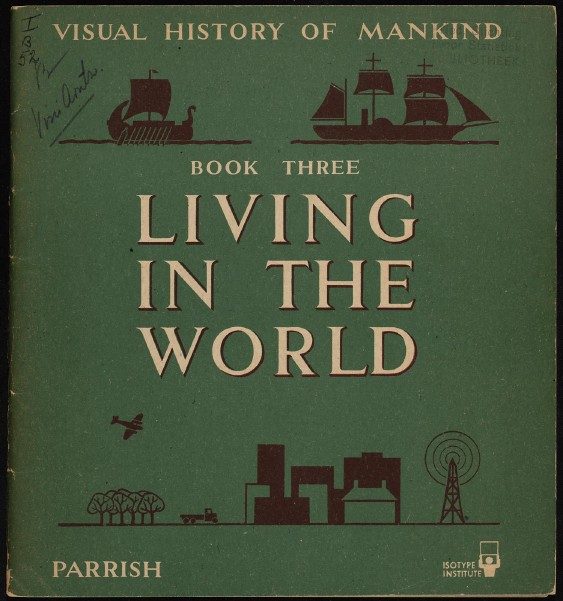
 Isotype Archive