Page text
VISUAL HISTORY OF MANKIND |


IN BARLY                            ©


PARRISH     ae     :   sorvne lah
                         INSTITUT
A NEW DEVELOPMENT IN VISUAL EDUCATION
The Scottish Report on Primary Education (1946) says of visual education:
_ “It depends not so much on direct photography as on the animated cartoon, and
sets out with the purpose of teaching a definite lesson: not background illustration
but essential education. It studies the psychological approach, makes use of
all possible devices of sight and sound to arouse and maintain interest, and
ruthlessly excludes every irreleyant detail. The skill of the most inspiring and
imaginative teachers can thus be allied to all the devices of the modern technicians
to produce a teaching medium of extraordinary power that may be made available
in every class-room in the land.”
The Visual History of Mankind is an attempt to translate these words, written of
the film, into the.printed book. The picture language, Isotype, was designed by
its originators for this educational purpose. Clarity and simplicity is its chief aim.
All irrelevant detail is omitted, the same symbols occur over and over again so
that the reader quickly recognizes them, colour creates interest but is used always
with meaning and not merely as decoration, attention is paid to arrangements —
which will present easily remembered patterns. This new instrument is used to
make statements and tell stories which are not simply of background yalue but
are themselves an essential part of the education of modern citizens.
_ The books are intended for use at the stage, described in the Report, when the ©
pupils are “in a position to realize the patience and genius of our early, ancestors in
making those inventions and discoveries upon which the later developments of ©»
civilized life are based . . . to follow with intelligence and interest the great stories
of civilization, such as the story of the ship, the wheel, the road, the alphabet, —
- lighting, weights and measures, law and order’. Teachers will, of course, use the
charts in the light of their own experience. Some will use them as texts, study
them with their pupils, help them by questions to find the right words to describe
what they see, and use the blackboard to summarize the lesson. Others will tell
stories, illustrating them with film strips and other pictorial material as visual
aids, and then turn to the books to drive home and expand what has been dealt . 1
with. Still others will continue to use the ordinary story books and use the charts
“aS geography teachers use an atlas. But all of them will find in these books an
Opportunity to “study and experiment”, in the words of the Report, “with a
technique of teaching which seems likely to be of revolutionary importance’.THE THEME OF THESE BOOKS
BOOK 1
LIVING IN EARLY TIMES
In the long, slow ages before written history began, men learned gradually to make use
of their natural environment. They found out how to make, keep, and use fire; how
to extract metals from their ores; how to shape tools. The hunters of animals domesti-
cated some and lived in partnership with them. The gatherers of herbs and berries
discovered agriculture. In river valleys, like that of the Nile, fields were cultivated and
villages grew up. By the side of lakes, in houses built on piles, small groups of men
lived more securely than their ancestors. Instead of furs, woven clothing began to be
worn; in the huts crude rushlights and torches glowed at night; on the rivers the first
boats were to be seen.
» BOOK 2
LIVING IN VILLAGES AND TOWNS
These great fundamental discoveries made it possible for human beings to livein larger
groups. Families gathered into villages and towns for mutual help and protection.
‘X This made possible division of labour with the consequent advantage of specialization.
‘But it set problems of social organization which it has taken centuries to solve.
NOK 3)
‘WG IN THE WORLD
\. as towns and cities grew, they extended their influence and rule over the sur-
\countryside. Later, the civilized regions came into contact with one another
‘mmerce and through war. Improving techniques speeded the process of
\unication and led to the exploration of the whole planet, now seen to be
\ slowly and painfully, mankind is learning the lesson that secure and
comes not through the enslavement of human beings but from the
‘tation of natural resources.WITH ISOTYFEe’s
COMPLIMENTS
VISUAL jell SU Oeik 46 OF MANKIND
I iW
I IN, IN E A R LY Del MeesPUBLISHED BY ADPRINT LIMITED LONDON COPYRIGHT 1948
PRINTED IN GREAT BRITAIN BY JARROLD & SONS LTD NORWICH ENGLAND
HONORARY       EDITOR             LANCELOT                      HOGBEN


      PREPARED       BY                 OTTO           &        MARIE             NEURATH
                                        DIRECTORS          OF    THE         ISOTYPE        INSTITUTE


                                    J.       A.        LAUWERYS
                                        PROFESSOR           OF    COMPARATIVE
                                        EDUCATION           -   UNIVERSITY             OF    LONDON


      WITH   21   CHARTS   IN   EIGHT    COLOURS          BY     THE     ISOTYPE        INSTITUTE


A   MAX   PARRISH          BOOK           SOLE   DISTRIBUTORS    GEORGE            G.HARRAP
                                                                                    :
                                                                                                          &     CO      LTD
                                                                 82   HIGH   HOLBORN   LONDONTMWCI   --SYDNEY   .   WELLINGTON
miestk OF CONTENTS
How to Use this Book Pages 6 & 7
The Ages of Man Chart 1
Man comes on the Scene Chart 2)
Early Man and Animals Chart 3
Dog and Man get together Chart 4
How Cave Man hunted big animals Chart 5)
Man makes use of Animals Chart 6
Tools and their uses Chart 7
Getting Fire; Keeping Fire; Making Fire Chart 8
Tools in Flint; Tools in Copper; Tools in Iron Chart 9
How Man uses Fire Chart 10
From Forest to Coke and Charcoal Chart 11
Making Light                         Chart


Making and using Boats               Chart


Three kinds of Bridge                Chart


Moving heavy stones                  Chart


The Lake Dwellers                    Chart


The Early Farmers                    Chart


Making Clothes                       Chart


Seasons on the Nile and in Britain   Chart


                                     Chart   20
Living by the Nile in Early Times

                                     Chart   21
Digging down into History


Things to do Yourself                Page    48


                                     Page    49
Some Books to Read
HOW TO USE THIS BOOK
Inside this book you will find stories told in pictures. They have been drawn in a
special way: you will notice that in them the same pictures, say for “man” or “tree”
or “bear”, come in again and again, just as letters or words do in an ordinary book.
These Isotype symbols, as the pictures are called, are always kept as simple and clear
as possible, bearing in mind that each has to be recognized quickly and must be
different from all the others. As a result they can be put together like the letters in i
a written line, to make up a story. Each chart in this book tells you several such stories
and each of these is itself part of the great story of early man. By looking at them you
will find out how our forefathers learned to make good use of the things they found eo
around them. This is the greatest adventure story of all.
We like colour, but use it always with a purpose and never simply to get a pleasing
effect. In our pictures, indeed, everything has meaning and nothing is put in only
because we think it beautiful. We try to avoid anything which is not part of the story
we want to tell, as well as any pictures which might not be understood in some parts
of the world. We want our stories to be read just as easily and quickly in China or
Africa as in Britain or America.
Isotype is a kind of picture-language intended for people of every kind throughout the
world, young or old. But like all languages it needs a certain amount of thought to
get the full meaning. It is not much good hoping you can, so to speak, catch the stories
we tell in one quick look. You must expect to spend over every page at least as long
as you would over a page of printed characters, and the more you look, the more you
will come to see.
Begin by looking at each symbol, and then at all the symbols in each line or column
     till you thoroughly understand the statements made. Go on like that until you have
     read the whole page. Then ask yourself questions and try to answer them. As examples,
     we have drawn up lists of questions, many of which would, we feel sure, come into your
     mind as you look at the page. You can certainly think of more.


     Then you will find big problems arising which will, we hope, send you to other books
     to find out more. We have made a list, on page 49, of books which we think you may
     find useful. It is a help, by the way, if two or more people look together at a chart:
     every one will think of different points or questions, and soon an argument or dis-
     cussion springs up.


     We have arranged our charts in an order which we think is a good one. But there
     is no reason why you should feel bound to follow it. After all, this book is in some ways
     rather like an atlas of history. Around a geographical atlas, studies in geography can
     be grouped and many geographical stories told; and you can look at the maps in any
     order. So, too, many stories can be spun around our charts, and you can, if you wish,
     look at the last before the first.


     Those who look at maps often want to draw maps of their own. In the same way, we
     hope that our charts will make you want to tell stories by pictures, using symbols like
     ours or others which you could invent yourself. If you turn to page 48, you will find
     a few suggestions how this might be done. Whether you do this or not we hope you will
     enjoy our stories and find them exciting and easy to remember.

                                                                            The Editors


ri


om
The Ages of Man
AGES
Notice that two different date-lines
are shown here. The second (the eras
of history) is a small part of the first
600,000
| made bigger
years ago
ICE AGE
1
Are the ice ages getting longer or
shorter?
400,000 é
years ago
About how many years was the last WARM Climate
ice age? PRO,
Ts it likely that another ice age will ICE AGE ; E a
200,000
begin soon? years ago
4 TRR
R
How many ice ages have there been
during the last half-million years?
ERAS... ICE AGE
=)
Now
About how many years does the
black line stand for?
About how many years does the blue
G
line stand for? ERAS
(in detail)
Ul Baa
CHRISTIAN An
MOHAMMEDAN (SgiiSsSisinininOiiSIOnIInIE
Which era started first?
ROMAN Se
CHINESE eae
JEWISH
Look at chart 2, and compare it
with this one. At about what points
in the date-line would you put each
of the pictures?9
Look at charts 5 and 20 in this book
and decide whereabouts on these
SR BK a ee os me ae date-lines the scenes shown took
1 — 700,000 |place.
WARM CLIMATE years ago
me
Which era is no longer used to-day?
WARM CLIMATE
cep | 500,000 |About how long has the Jewish era
ICE AGE years ago |lasted already?
12
About how long did the Roman era
= last?
300,000
3 years ago 13
a About what fraction of the whole
length of the line is the Jewish era?
i WARTIRC Tne ian what fraction is the Christian
100,000
> years ago |]4
Ts the Chinese era still used?
j 15
& Did men manage to live through the
ice ages?
16
Why have the era lines been made to
start on the right and not on the
left?
Chart |Man comes on
the Scene
1
Which of the pictures shows things
that happened perhaps
years ago? Millions of years ago?
Thousands of years ago? Hundreds
of years ago?
2
Which animal is a dinosaur? A
mammoth? What other animals can
you spot?
When was the climate coldest?
Look at other charts in this book to
see whether you can find anything
in them that is like scenes on this
chart.
2
What other chart in the book tells
you whether the men could have
killed the mammoth or the bear?
Why is it that trees seem to be
getting fewer?
Between which two periods did the
number of men alive grow most
quickly?
8
 In picture 2, does it look as if the
 climate was getting warmer or colder?

  9
  What    animal   to-day   is   like   a
  mammoth?

  10
  What are the most striking differences
  between pictures 4 and 5?        :

  11
  Tell how the way men spent their
  time changed little by little from
_ |picture 3 to picture 4, to picture 5.

      2
  Did men and dinosaurs live at the
  same time?

  13.       ’
  Is it possible to put the time of the
  first picture anywhere on chart 1?

  14                              ;
  Whereabouts on chart 1 might the
  time of the second picture be placed?

  iS)
  Look at chart 5. Can you now say
  where the three men in the third
  picture on this page would take
  shelter for the night?


                           Chart 2|
Early Man and
Animals
These pictures show events that took
place many thousands of years ago,
when great parts of the earth were
covered with ice.
Give the names of the animals you
can see.
2
Which of these animals are dang
when wild?
3
What uses of fire are shown in the
pictures?
4
How is the fire kept alight?
What weapons are the men using?
Say what the men are doing in each
picture.
Why should the animals come near
the fire?
8
Would the animals come very near
the fire or touch it?
9
      Why do not the men shoot the horse?

      10
      Are horses still used to give milk?

      11
      Do we still get leather or hides from
      horses?

      2
      Are goats and sheep still used to give
      milk?

      13
      For what other purposes, not shown
      in the pictures, are goats and sheep
      used?

       4

      Tell a little story about the way in
      which early men used fire as protec-
      tion against fierce animals.

      15
      Tell a little story about the way in
      which fire helped early men to tame

iad
      some wild animals.

      16
      Which of the things you see early
      men doing in the pictures are still
      done by us, or by other peoples,
      nowadays?


                             Chart 3
Dog and Man
get together
Say what the dogs are doing in each
of the pictures on the left.
2,
What is the hyena doing in each
picture?
3
What do the dogs gain from hunting
with the hyena?
4
Do wild dogs and hyenas still hunt
together in any part of the world?
What weapons are the men using?
6
Say what the men are doing in each
picture.
Say what the dogs are doing in each
of the pictures on the right.
In which pictures are the dogs afraid
of the men?
9
In which of the pictures do the dogs
behave towards men just as they do
towards hyenas?
10
Do the dogs go on behaving in the
same way (i) to hyenas, (ii) to men?

11
What do the dogs gain from hunting
with men?


What do the men gain from hunting
with dogs? (See also chart 6.)

13
Are dogs still used for hunting nowa-
days?


14
What other animals besides dogs
help man in his hunting?

15
Can you explain how it is that dogs
and men should come to hunt to-
gether as friends?

16
The dogs shown on the right are
different in shape in each set of
pictures. How did this come about?

slg
What kinds of food became easier to
get once men and dogs learned to
live together?


                       Chart 4
How Cave Man
hunted big animals
1
Name the animals you can see in
these pictures.
Which of the men in the first picture
is digging? Which is gathering ber-
ries? Which is hunting for snails?
What is the woman in picture 1
doing?
Why is the fire kept outside the cave?
What are the two men doing in
pictures 3 and 4?
Where did these two men get the fire
from?
Why is the bear running away?
Why do you think the men have
covered the pit with branches?
How is it that the animal falls into
the pit in picture 4?
10
      What is each of the three men doing
      in picture 5?


      11
      Name all the weapons and tools
      which the men have used in these
      pictures.


      12
      Which do you think is the stronger,
      a bear or a man?

      13
      Which do you think is the more
      clever?


      14
      Explain how cave men sometimes
      killed big and fierce animals.

      iS)
      Do men anywhere still capture big
      animals like this nowadays?
Fi


—_
 tt
      16
      How is the man in picture 5 trying
      to kill the deer?

      17
Fe    Did this story take place during an
      ice age?


at


eR
                           Chart 5
Man makes use of
Animals
1
Name the two animals shown which
are used for hunting.
»
Explain what the dog does and what
the man does.
3 nie
How does the dog help the man and
the man the dog?
4
Why is there a hood on the head of
the hawk in the first hawk picture?
Explain what the hawk does when
the hood is taken off.
6
Are dogs still used like this anywhere?
Name two other animals used for
hunting.
8
Why does the man hunting with the
hawk wear gloves?
If you went hunting with a gun,
which would be the more useful, the
hawk or the dog?
10
What are the men doing in front of
the altar with four steps?

 1
What things other than animals have
men worshipped?

12
In which picture can you see camels?
What country is being shown? What
are the camels being used for?


Give the names of three animals used
for carrying goods or people.


What is the name of the animal being
used to amuse people? Give the
names of four other animals used for
amusement.


15
Explain what the elephant is being
used for. Where have elephants been
used like this?

16
Name the three pets shown. Name
three not shown.

 17
Three animals are shown as produc-
ing food which we eat. What are
they? What food do they give?


                       Chart 6
Tools and their
uses
1
In this chart, what is the colour
brown used to show? What does the
colour blue show?
@
Which of the tools shown is called a
sickle, a gouge, a drill, a lathe?
3
Name all the tools shown.
4
Which of the tools are used by
hitting the material being handled?
5
Which of the tools shown are used
by being placed on the material and
then moved along?
6
Explain how a bow can be used to
make drills move round and back.
Explain how a bow and a gouge to-
gether can be used to shape and
fashion a round piece of wood.
Explain how the foot-lathe shown
works. Why is it a better tool than
the hand-lathe shown just above?
9
Name three tools of the nail-family.


10
A bow is used to make a drill move
round and back in two pictures.
Explain the differences in the effect
between the two pictures.


11
Can you see another way of making
a drill move round, besides the bow?


12
Which of the tools shown could be
made entirely of wood?


Explain what each of the tools is
being used for in each picture.


14
In which case is one tool doing the
work of two?


15
Which of the tools shown have you
got at home?


16
In which other chart do you find a
bow used to make a drill move round
and back? For what purpose?


                      Chart 7)
Getting Fire
Keeping Fire
Making Fire
1
Explain how the tree in the first
column of pictures catches fire.
What do the men in the first column
of pictures do?
In some pictures lava comes down
the side of a hill. What does it do to
the bush when it touches it?
4
What is the name given to a moun-
tain from which lava runs?
5)
Look at ‘chart 21. Then say what
else besides lava can come from a
volcano.
Explain what the men are doing in
the second column of pictures. egret
oy
Does lightning and do volcanoes
often set fire to trees?
How could the men take fire some
distance from a volcano?Would early men, before they learned
how to make fire, find it easy to get
fire? Explain.
10
Explain what the man is doing in the
third column of pictures.
11
Why does the fire flare up again when
the man in the third column of
pictures takes up the blocks of turf?
12
Lock at the fourth column of
pictures. In what other chart can
you find a bow used to make a drill
go round?
13
Explain how the fire gets lit in the
fourth column.
14
In the fourth column, yellow stands
for straw. Why is it being used?
15
What uses of fire have you come
across in charts printed in this book?
Give a list of the uses of fire.
Chart 8Tools in Flint
Tools in Copper
Tools in Iron
Flint is a stone which flakes easily.
ee
Copper and iron are made out of |
stony material called ore. .To get
YY
metal from ore, it is mixed with
charcoal and made hot. Iron ore needs
more heat than copper ore.
In picture 1 which man is flaking bits |
of flint from a large lump? Why is he
doing this?
What is each man in picture 1 doing?
With what material could a flint axe-
head be tied to a handle?
4
What could be done when a flint
axe-head gets blunt and chipped?
What tool is the man using who is |
chipping off copper ore in picture 2?
Hot copper ore cracks when cooled
quickly. How was use made of this |
to get small lumps of copper ore?How is the copper ore being moved
about?
Explain how copper can be made
from copper ore.
Why is the man who is making cop-
per using a blowpipe?
10
How will the copper be got out of the
furnace?
11
How is a copper axe-head made from
a lump of copper?
(1)
How could a blunt copper axe be
made fit for use again without a
grindstone?
RTE
N SERS SF NDTIS YE SS 13
How is an iron axe-head made out of
a lump of iron?
14
How could an iron axe-head be
re-sharpened?
il)
What do you think are the reasons
why iron tools took the place of
copper tools?
Chart 9How Man uses Fire
1 L !
In which pictures do you see a hog
being cooked? Why is it being
turned round and round?
A
How do we grill meat at home now-
adays?
Explain how the corn shown is made
first into flour.
Flour can be mixed with water to a
paste. How was this paste made fit
for eating?
5
Name four other foods besides meat
and corn which need fire before being
ready for eating.
The basket shown is made of sticks
and lined with clay. Why can it not
be put straight on the fire?
Explain how water could be boiled
in a wooden vessel.
What other way of boiling water is
shown? Which of the two ways will
save fuel?9
A man in a white gown is shown in
front of an altar. What is he about
to do?
10
What animal is about to be sacrificed
by the priest?
11
Explain all that is happening in the
two pictures showing an altar.
12
Tn two pictures a dead man is shown
lying flat on a stretcher. Explain
what is happening.
13
In what ways can dead bodies be got
tid of? Why must they be got rid of?
14
Explainshow news of the shipwreck
gets to the king.
15
Why are the fires in the shipwreck
pictures put on the tops of hills?
16
Look at other charts in this book to
find other uses of fire. Make a list
of the uses of fire.
Chart 10From Forest to
Coke and Charcoal
1
Coke and charcoal are both chiefly
the same material called carbon. In
which colour is carbon shown on the
chart?
What colour is used to show woody
stuff?
3
Ts ordinary coal pure carbon?
4
When were trees shaped like those on
the left?
How did the trees in the ancient
forest come to get covered with
water and mud?
What are the white dots coming up
through the water from the rotting
wood in the second picture on the
left?
Explain how men get coal out of the
-eveted
ground.
What use is the tube or chimney in
the middle of the ovens?9
What are the men doing in the first
picture on the right ?
10
Where would charcoal burners
usually build their kilns or ovens?
11
\ To change the wood in the kiln into
charcoal it must burn, but not too
strongly. How is this done?
{ h gee What could charcoal burners cover
a2
their kilns with?
13
What are the differences between
charcoal and coke?
HUNS = Bz
Explain why charcoal is more ex-
What would happen to the wood in
the kiln when it was set alight, if it
Ha through the other charts in this
was not covered to keep the air out?
UU Ny
HM AW } book to find some uses of charcoal.
Chart IIMaking Light
How can the branches of a tree be
TORCHES
used to give light?
In what charts do you see men who
use torches? How may they have set
their torches alight?
In what two different ways can the
OLIVE OIL
fat of an animal be used to give light?
In the third line olives are shown.
How can oil be got from olives? CANDLES
Look at the shapes of the vessels in
lines 2 and 3. What differences do WHALE OIL
you notice?
Explain how a candle can be made,
MINERAL OIL
~ starting with the fat of a sheep.
Explain how whale oil can be used
to give light.
8
Which of the ways of getting light
could be used in their homes by ELECTRICITY
farmers who had to make everything
they needed?In which lines are wicks used to give
light? In what condition — solid,
liquid or gas—must fuel be before a
wick can be used?
Say how coal can be got out of the
ground.
11
Which of the oil lamps shown would
give the most steady. light?
12
How can gas be got from coal? How
can gas be used to give light?
13
In line 7, which is the burner? The
gas holder? The oven? The purifiers?
14
In line 8, which is the electricity
generator? The transformer? The
pylons? The lamp?
IIS)
Why are the lines drawn under each
set of pictures different in colour?
What do you think each colour
stands for?
Chart 12Making and using
Boats
1
Explain what each man is doing in
the top left picture.
You can see a man cutting down a
tree. What is the axe he is using
made of?
Explain why it is better for two men
to paddle the log than for one.
we ty Ww
What drawbacks are there to using
a log in the way shown?
Explain how a log can be hollowed
out by men who have only stone
tools.
6
Why is the hollow log flattened at the
bottom and tapered at the ends?
1
In what ways is a boat made of
planks better than one made from a
hollow log?
What tools are chiefly used in making
a boat from planks? Explain how
each is used.What new invention made it possible
for men to use oars instead of
paddles? Why are oars usually better
than paddles?
10
What is the first man in the third
boat using his paddle for?
iit
What are the differences between the
third and the fourth boats in the last
column? Why is the fourth better?
ID
Explain how a plank boat can be
made from a tree.
8)
What did men gain from using boats?
14
What other material besides wood is
used nowadays for making boats?
Look at other charts in this book and
find men who are able to make boats
out of planks.
16
In what ways does the last of the
boats shown differ from a racing
boat?
Chart 13|Three kinds
of Bridge
Which two bridges are in some ways
like one another?
2
Explain how a rope bridge could be
made. What materials could the rope
be made of?
3)
Are rope bridges made anywhere
nowadays? What are their draw-
backs?
Explain how a stone bridge can be
made. How could one bridge a very
wide river with stone?
In what way is a suspension bridge
better than a stone bridge?
Explain where stone bridges are
mostly used.
Give the names of some famous
suspension bridges.
Give some idea of how a suspension
bridge would be made.
Moving heavy stones
1
Look at the top picture. What are the
five men doing? Why do they not tie
their rope directly to the stone?


2
Do you know of any building which
might have been made by men like
those in the top picture?

3)
Name some buildings which may
have been made by men like the four
in the second picture.


Explain how the four men in the
second picture moved stones from
one place to another.

5
What inventions did men have to
make before they were able to use
oxen to move stones about?


What advantages are there in using
small rather than big stones for
building?


WE
Tell the story of how men learned to
move stone from place to place.


        Charts 14 & 15]
The Lake Dwellers
it
What are the men in the boat doing?
How may they have made this boat?
What are the men on the platform
doing?
Tre
What are the men on the land doing?
What animals are shown?
5)
How did lake dwellers keep their fire
from setting their house alight?
6
What kinds of food did lake dwellers
eat?
7
What did the lake dwellers do when
the sun went down?
8
What advantages did the lake
dwellers get from putting their house
over water?
9
Which of the tools shown are fish
hooks? Which is a scythe? A har-
poon? A saw?0
Give a list of the tools and weapons
used by lake dwellers.
Which of the tools and weapons
shown could be made out of bone?
Which out of stone?
12
Explain how lake dwellers may have
built their houses. :
3}
Name some places where lake
dwellers may have lived.
14
What kept wolves from the lake
dwellers’ cows?
15
For what purpose could each of the
tools or weapons of the lake dwellers
be used?
16
Are there any people nowadays
whose methods of building and
living are like those of lake dwellers?
Name two things the lake dwellers
did which we do.
Chart 16The Early Farmers
1
Out of what materials would these
farmers make their houses?
2
What advantages did they get by
putting the house partly below the
ground?
What is the person, outside the house
in the top picture on the right,
grinding?
4
Give some reasons why the plan
of the house shown is a good one.
5
Where did these farmers keep their
fire?
6
What kinds of food would these
people chiefly live on?
Why was a fence built round the
village?
8
What other protection did the village
have?
Mm =
9 : uO 2
Against what did the villagers want
protection?10
From where did these farmers get
their water?
11
In what parts of the world do people
still live like the farmers shown?
2
What tools did these farmers use to
dig the ground?
13
What sort of bridges did these
farmers use and how were they made?
14
What other animals besides cows
might these farmers have near them?
15
Why did these farmers not keep their
fire inside their houses?
16
Which of the buildings shown were
store-houses?
17
What do you think the farmers may
have kept in the large store-houses?
In the small store-houses?
Chart 17)Making Clothes
I
What animals can you see?
In what other charts can you see
skins being got ready?
In what line can you see the plant YY
VaNEN
called flax? Linen
In what line can you see a cocoon?
5
The red garment is made of artificial
silk. From what material can you
start to make artificial silk?
Silk
6
Which of the four kinds of clothing
shown cannot be made without a
factory?
7
How can linen cloth be made, start-
ing from flax? Artificial silk
~
How are silk threads made, starting
from leaves?
9
What do people gain by spinning
single threads into thicker threads?10
The four bobbins in the left-hand
column stand for steps in the spin-
ning. What happens to the threads
as the spinning goes on?
11
How is the twist put into the thread?
(apo age Dat a
Gq ry ry a]
if LJ a ii 1 iy > } 12}
\ \ \ \ \ When twisted together most fibres
-\ \ stick together. How is this useful?
yw Le
Explain how a strong thread can be
PAY ANAYAYA made from fibres.
tan AA 14
Where do you see a shuttle? A
a= weaving frame?
pee ee ed
Tu 15
=s=\= Look carefully at the way the shuttle
ein travels from left to right and then
—egupetee right to left. Does it always go under
| | | | | the same threads?
Ea eno] eof 16
Seas Why does the man in the top right
picture sometimes pull the stick to-
wards him, then let it go again?
. 17
( “ \ \ \ \ Explain how cloth can be woven
; \' \ from threads.
Chart 18|Seasons on the Nile
and in Britain
il
How long a period of time does each
picture on the left stand for?
2
For how many months in a year is
the Nile in flood?
3
When the Nile flows over, why does
not the water pour all over the
desert?
When the land dries again, good soil
is left by the water. How is this good
soil shown in the pictures?
5
How did the Egyptians dig this soil?
6
How long do the crops take to grow?
q
During which months of the year do
Egyptians gather their crops?
During which British seasons do
crops grow in Egypt?
’)
Would it be possible for the crops to
fail in Egypt? Why?
10

          Ph Po                                                 Explain why the Egyptians can grow

                              3-8


s/s $8
          S| AB iB
                                                                crops although it hardly ever rains
                                                                in Egypt.

                              6-88
                                                                11


            $-8   8
                              ey                                Why are floods welcomed in Egypt,
                                                      SUMMER    but disliked in England?

                                        o


                       “—~*
     ”
Ss             g                   4                            1


                                    @ TXo 7S
                                               2 oe
                                            €
              =e
      <                                                         How is it that Egyptian farmers can
a
                       Zhe
                   €                                            get on quite well with very little

              =e
                                                                manure?
     os
          <                   <             «

<                  €
                       °      TS    <

                                                      AUTUMN    13
                                                                How   many   seasons   are    there   in


                              <t
           -O- -0
                                            a
                  a
                                                                England? What are they called?


<<<                                 <<
                                                                14
                                                                What are the chief differences be-
                                                                tween the seasons in our country?

                                                      WINTER

                                                                15


                  <a
          = =i) -
                                            =) -@ -
                                                                What are the chief differences be-
                                                                tween the seasons in Egypt?


                              =i)
                                                                16
                                                                Tell about the sort of work which
                                                                farmers in Egypt and farmers in our
                                                       SPRING
                                                                country have to do. How far is the


                                            8-8-8
                                                                work the same in both countries?


                                                                                   Chart 19]
                                                      SUMMER
Living by the Nile
in Early Times
I
What is the name of the river shown
on the map, and of the seas?
2
Where do people get water from in
an oasis?
3)
On the map how is an oasis shown?
Where does the water in Egypt come
from?
5
In what parts of Egypt do crops
grow?
In what parts of Egypt would people
settle to live?
In what parts could the Egyptians
build temples or pyramids?
In what parts of the country do the
floods start?
What are the names of the big monu-
ments shown in the first picture?
What were they used for?
10
With   what    countries    might   the
Egyptians trade?


Explain what each man in the second
picture is doing.


12
Explain’ how Egyptian boats were
moved and steered.


13
One man is shown in both the second
and third pictures. What is he doing?


14
How could      Egyptian    farmers give
water to their crops while these were
growing?

ils)
Which man is throwing seeds on the
ground?

16
Where do you see a buffalo? What is
the animal made to do?

17
Explain how the Egyptians made and
stored wine.

18
What do the blue dots in the fourth
picture stand for?


                     Chart 20
Digging down into ROMAN PERIOD
History
1
What is the big building, with a fire
in front of it, in the first picture?
In what charts have you seen fire
burning on or before altars?
3 nate
What is the grey cloud in the second
picture made of?
4
MIDDLE AGES
Why is there a grey layer on the
buildings in the second picture?
5)
What is the name of the red stuff in
the second picture?
LAST CENTURY
In what other chart have you seen a
volcano?
7
Why are waves shown in the sea in
the second picture?
8
Tell the story of what happened in
the second picture.
Y)
How can you tell that many years
passed between the third and fourth
pictures?10
Say what happened between the
second and third pictures.
ith
What is happening in the fourth and
fifth pictures? What made them think
of digging just there?
12
What sort of material will those who
dig here first have to remove?
13
What sort of Roman remains will
the diggers be likely to find? What
materials would they be made of?
14
Would the diggers be likely to find
cloth or food or wine?
15 i
Why is the shape of the volcano
shown differently each time? What
happens?
16
Say how, by digging, people can
sometimes find out what happened
long ago.
Chart 21]THINGS TO DO YOURSELF
1. You have seen how stories can be told in pictures. Try to tell some yourself. You
can copy the symbols used in this book and you may like, in some cases, to use coloured
paper or paints. Use these symbols to tell the following stories:
8 How early men got wheat and made it ready for eating. Do not forget the pounding
of the grain and the cooking of the flour.
> . How early men hunted an animal and got it ready for eating. Do not forget the
getting of fire.
. Catching a parrot or other bird and putting it in a cage.
x The work on a modern farm, including the milking of cows and the keeping of
hens.
You will think of other stories which could be told in the same way.
2. Try to invent symbols of your own and use them to tell stories. For instance, make
up two charts from which you could compare the way children live now with the way
they lived in the days of cave men.
3. Many of the charts in this book will give you ideas for making models. Such models
can often be constructed easily with glue, cardboard, and coloured paper. Begin by
building a model of a lake village or of an early farm. If you can bring in a story, so
much the better.
4. In some charts, things are being done by human beings. You may feel like trying
some yourself. For instance, you could easily make a simple lathe like the one shown
in Chart 7, and you could bore a hole with it. But, often, if you try to do things which
early men had to do you'll find great difficulties in your way. If you try to make fire
as in Chart 8, or if you try to cut down even a small bush with a sharp flint your
admiration for early men is likely to grow but you are not very likely to succeed.
48SOME BOOKS TO READ
The list below gives the titles of a few books dealing in greater detail with topics in-
cludedin this Visual History. Some of these books are difficult to read, but they contain
*
interesting pictures. The easier ones are marked Most of them will be found in any
Public Library, and possibly in its Children’s Section. It is certainly worth while
looking inside the Children’s Encyclopaedia, Harmsworth’s History of the Wor Id, and
Newnes’ Pictorial Knowledge. Handbooks issued by Museums like the Horniman
Museum are also worth consulting.
*AULT, NORMAN. Life in Ancient Britain HOUGH, WAU: Fire as an Agent in
Human Cultu
U.S. Gov. Printing Office, Washington
Longmans Green
*BOYLE, MARY E. In Search of Our An-
cestors Harrap *1LIN, M. Turning Night into Day: the
CHILDE, V. G. What Happenedin History Story of Lighting Routledge 4)-
Penguin *ILIN, M., AND E. SEGAL. How Man Became
CHILDE, Vv. G. Man.Makes Himself Giant Routledge 7/6
‘atts *LOON, HENDRIK VAN. Ancient Man: the
CHILDE, Vv. G. The Dawn of European Beginning of Civilization Harrap 3/6
Civilisation Kegan Paul MacCURDY, GEORGE GRANT. The Coming
DAVIDSON, D. Men of the Dawn — Watt: of Man: Pre-Man and Prehistoric Man
*DITMARS, R. L. The Book of Prehistoric Chapman & Hall
Harrap PEAKE, HAROLD. Early Stepsin Human
Animals
FORDE, C. DARRYL. Ancient Mariners Progress Sampson Low
owe EAS HAROLD. The Origins of Agricul-
tu Benn
GLANVILLE, S. R. K. Daily Life in Ancient
Egypt Routledge seein MAUD AND MISKA. The Story
Book of Whee!s Dent
GOODWIN, ASTLEY J. H. Communication
Has Been Established Methuen PIGGOTT, STUART. The Progress of Early
HARRISON, G. B. Digging for History Man Black
Nelson *QUENNELL, MARJORIE, AND C, H. 8. Every-
HAWKES, CHARLES F. C. The Foundations day Li in the Old Stone Age Batsford
of Prehistoric Europe Methuen *QUENNELL, MARJORIE, AND'C. H. B. Every-
HAWKES, JACQUETTA AND CHRISTOPHER. day Life in the New Stone, Bronze and
Penguin Early Iron Ages Batsford
Prehistoric Britain
HAWKS, ELLISON. The Triumph of Man WOOLLEY, SIR C. L. Digging up the Past
in Science and Invention Nelson Penguin
HOLMES, GEORGE c. Vv. Ancient and WOOLLEY, SIR Cc. L. Ur of the Chaldees ~
Modern Ships Chapman & Hall Penguin
fee 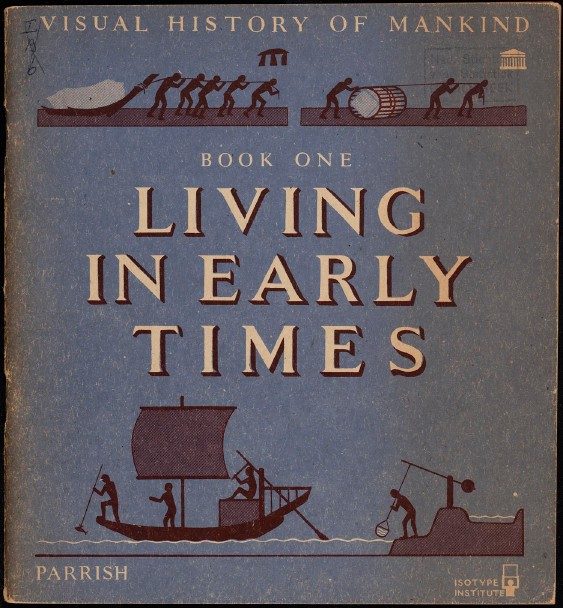
 Isotype Archive