Page text
DEMOCRACY
                                                                Na E NEW DEMOCRACY
NEW
 H E
            etkens J iQM ENa ndahNE}Ws5OCUHBLY Nicholson Wat
                                                  ei
                                                  SE SUR   RR
                                a ee              See i
                                                                       i
                                                                           y
DEMOCRACY
NEW
                                                                      HE
                                                                      +
TH £ N E W DUE MO € RA CY
A generation ago millions gave their lives in a crusade to make the world safe
for democracy. The crusade ended in complete victory ; democracy appeared trium-
phant everywhere. And then something went wrong. Elation and enthusiasm gave Women and
place to.disillusionment and frustration. The men whom their country needed
became men without work; homes for heroes proved to be slum tenements;
hundreds of thousands of the country’s children remained below the poverty line,
a New Society
Within little more than. twenty years of their triumph the crusaders of democracy
were facing disaster on the beaches of Dunkirk.
It need not and must not happen again. This time democracies must not only
win the war; they must win the peace. The peacemakers of1919 lost the peace for
Charlotte Luetkens
democracy because they failed to distinguish between the underlying principles of
democracy and the outward forms in which it is clothed in a particular age. They
thought they could re-establish the principles by simply restoring the old
nineteenth-century forms. We are to-day paying the dismal price of their blunder. With 14 pictorial charts in colour designed
This time we must see to it that twentieth-century democracy is tuned up to by the Isotype Institute
twentieth-century conditions. We must recognise that scientific advance, hastened and 70 photographs
by the stimulus of total war, has created new possibilities and evolved new tech-
niques of social organisation and planning which carry revolutionary implications
for human society. Democracy will only live on and become once again a dynamic
force if it can boldly turn those techniques and discoveries to its own purposes,
using them to put an end to unemployment, insecurity and want, and to open up
new frontiers of human life and freedom.
This is a task which cannot be left to the statesman and the expert. It is the
individual responsibility of every citizen. The essence of a democratic community
is that its citizens should take an active part in its decisions; and this is more
imperative than ever in an age in which the state is everywhere extending the
range of its activity. Active citizenship is the indispensable condition of freedom
_ ina planned society.
But the citizen can only take an active part in the community if he is properly
informed about the choices and possibilities before it. To contribute to this body
of informed opinion, as a basis of social action, is the purpose of this series. It is
written and edited by experts who believe it to be their responsibility as citizens —
to put their special knowledge before the widest possible public, using all the
modern techniques of presentation to give vividness to their subjects. It is written
primarily for the citizens of Great Britain, which, as the oldest of living demo-
cracies, has to-day a special responsibility to give leadership in working out the Nicholson & Watson London
pattern of the new democracy. But it is also written for the citizens of every -
community who believe that democracy is the only valid principle upon which
to run a modern society, and who mean to make it work.Designed and produced by
List of Pictorial Charts in Colour
Adprint Ltd London (Where charts are based on statistical material the sources are
indicated in brackets)
Page
Length of Life a Hundred Years Ago and Now 36-37
(Supplement to 65th Annual Report of Registrar General, England
and Wales, Part I, Life Tables, 1907; Statistical Yearbook, League
Copyright 1946 by Adprint Ltd London W1 of Nations, 1939-40)
Age Groups in England and Wales - 40-41
(Census, E. & W., 1931)
The Changing Position of Women in Britain 44-45
First published by
Nicholson & Watson IV The Battle of the Fragchise 68-69
in association with Political Rights of Women 72-73 —
Wells Gardner Darton & Co Ltd
Vi Students and Pupils in Different Types of Education 76-77
London 1946 (“Education in 1938,’’ Board of Education Report; Report of
University Grants Committee, 1937-8)
Vil Men and Women in Universities 80
(Stat. Abstr. for U.K., 1940)
Vill ‘Higher Education in Democratic and Hitlerite
Germany 81
(C. Luetkens, ‘‘Enrolments at German Universities since 1933,’
Sociological Review, April 1939):
1X Growth of Literacy in England and Wales 85
(Registrar General’s Returns)
Social Life at Home—A Century Ago and Now - 88-89
Xi Changes
in Fashion ot
Xl Women’s Underwear—Past and Present 92-93
Xi Use of Electrical Appliances—United States and
Great Britain 100-101
(U.S. Department of Commerce, Stat. Abstr. 1940; Business
Development Bulletin, ‘‘Domestic Electrical Appliances,’’ Samson
Clark & Co., Ltd., London, 1937; Report on Household Equipment,
Odhams Press, 1937) :
Printed in Great Britain by Jarrold & Sons Limited Norwich
XIV The Working Woman’s Day 104-105| , | CHART
|
Length of Life of Five Boys and Five Girl Born ,
A hundred years ago
—
L=—— |
:fio
WwW 10 years
i
i
20 30
1
!
]
40
.
50
!
60
:
70 years
i
]
4
——S——— | e
ce | eee
ig
SSS==
ct :
= |
blue: males red: females i coors gh
36 | , 237CHART I
- Age Groups inEngland and Wales, 1931 |
FEMALES
» MALES
net»}anni
eeheeeeeneentntny ‘Tn Te
|
_—[ineenneneenenennntn~ -devvenevocenntnanneenntdite
Aaeaseeneeneenianianiitenty UT APARA TEETH OEHTENEHOONY
blue and black: widowed and divorced
black: single blue: married
s over males
of females | : is}
outside red line: surplu : NSTITUTE .
IISOTYPE
Each symbol represents 250,000 persons ' : im| 3CHART III
The Changing Position of Women
in Britain
1775
LSS iA Education Public Position Occupational Legal Position
American ‘i itt
ndependence Steam Engine Position :
1800 -
in
i i — —
:
Colleges for Women
3
Be
=
=
Zz
if
I
Ee Born
T0-hours de
Mi
I
P
omen
‘So Divorce possible. for Women
igwomen|
ie‘EmpA in certain cases
Hl | Women al owed their own earnings |
=
: Married Women
= allowed their own property
=
= Women admitted to legal profes
= i}
civil service etc.
grhEFp, val grounds for.div.
: we
‘S
ee Rey
=
%, League
0
é
ations
ar men and wom
re al = Mothers given equal dy righ
=
® World War
Second |
é Conser iption
of women
|‘CHART IV
The Battle of the Franchise
real Men . Women
OTTOOEDOOOH ORONO
:
iveveevenievevintite
y 3
1832
FIRST 1838
r- |REFORM BILL \ - Women’s Political
Associations
1866
1867
ULLAL
|. John Stuart Mill’s Petition
- [SECOND for Women's Suffrage
REFORM BILL 1869
|_ First working-man Municipal Franchise
Candidate elected for women householders
vOvennenennevenniti
1884 4
— | THIRD
REFORM BILL q
1903
Women’s Social
and Political Union
vivininenenenenevit
1918 4
| 1918
Vote for all men
| Vote for women over 30]
over 21
1928
FOROTOTEEENHONONEY |
Women's suffrage
on equal terms with men
Red symbols: Number out of every 20 males or females over 21 years
who can vote for Parliament :
ISOTYPE iss
INSTITUTE
68 69.CHART V
Political Rights of Women
1915
1938
us
red: countries in which women had the same political rights as men in 1915
| ISOTYPE
INSTITUTE
red and blue: countries in which women had the same political rights as men in 19%‘CHART VI
Males and Females covered by the _ different Types of Education.
Adult Education
Universities
rlallalla eflflaBee clalla Balla calles lila ellalaBala
ts olla CuPals hibbih dhhbh hhcihbh diahbh dad
elas cla fafafafa cata fafa aa fafa ha canna
la ola fafa fafa thhbbh hdd
HONnN RHNOG OHOHH HHO ANRHGG
TUL rr
PAT TREE FOTHE HADES HOdtE Fidte vaOie HOneR HOON ROnEE cnuOE dt
deNe PORE OROOO PONE OnOE OE
Males PRO THA ROTEE DARED inte ttt HONGO POOED OOAAE OtOOO OOOO GEE Females
RULE OOOOH ROAD HPOROR nRPOE ORONO FOE
PAR TRAE TOTES THREE inte Thin POANH ONOOE AOPOA POdnE OnHEO dE
PEA THAT THO HibED HHtnE tit dite ONOEE Sone dtedE FoneEddE
PAA THANE THEN HitEE Sti ttt vaONE PONE AAHOR AottO detd OEE
PEO TADEE THEE HOE ROE tit OOOH OAAOR NARA ORONO GRHOO REE
Pre- war data for England and Wales
ISOTYPE ig)
INSTITUTE
eer 77CHART VIII
CHART VI!
‘Male and Female University Students Higher Education
Bd le : in Democratic and Hitlerite Germany
niAnD
neani
nen AS Ae aaete?
HARMED HHH a“sninnaietint 7
> AMAAANIINEdOttHHE > RPT tt
. — vv
: England and Wales
a thnehintit il
wi
aera
Each blue symbol represents 1 male student per 5000 male population
ou NT "|
or 1 female student per 5000 female population
- WH
mofii aj
® Universities igh
: ISOTYPE
& Technische Hochschulen INSTITUTE
Each blue symbol represents
“1. male student per 5000 male population. |
or 1 female student per 5000 female population
ISOTYPE igi
INSTITUTE
81CHART IX
Literacy in England and Wales
Among 10 men
Illiterates 3 Literates
ma TTnITITIT
- iin
STITT IIL
Ce TITITILLL,
TTT ILLL
eT ALLLe
STII LIL)
aL
soul
aeCHART X
Secal Life at Home
CHART XI

Changing Dress


     about 1850


           y |
             about 1875


                          about 1900


                                         .


                                       about 1925


covet)
ISOTYPE
                                              Now
CHART XII
Underwear Underwear :
Past Present
ISOTYPE is}
INSTITUTE
93a |
CHART XII
Electrical Appliances
in Ten Average Homes
6 a A
United States
Oso ® op
iy "
Sisal lolol
ws.
fi) oe fl] 7
Electric light, cooking and refrigerators
Vacuum cleaners, washing machines
Wireless sets . -
, ISOTYPE ig)
INSTITUTE
100 IoICHART XIV
The Working Woman’s.Day .
Clerical Worker
4] f
cecausaucouns
seeueenaenases
u isedesseesecauas:
To
Ey H A
H exes POT ie
_—
= fe)
S° -¢ } || Te)
5. i<j “
=
2a 2-_ ina
oO
>
Ht
Tt T \aeunenannans
peeuse “ jnuseesnunase
isauens t paeeaeneasaus
Trt t See
jaseeenesanan
jananusnseeus
iH sH +
3
= =¥ =+ io)
c
° c mum 2
ISOTYPE
INSTITUT be
104. 105 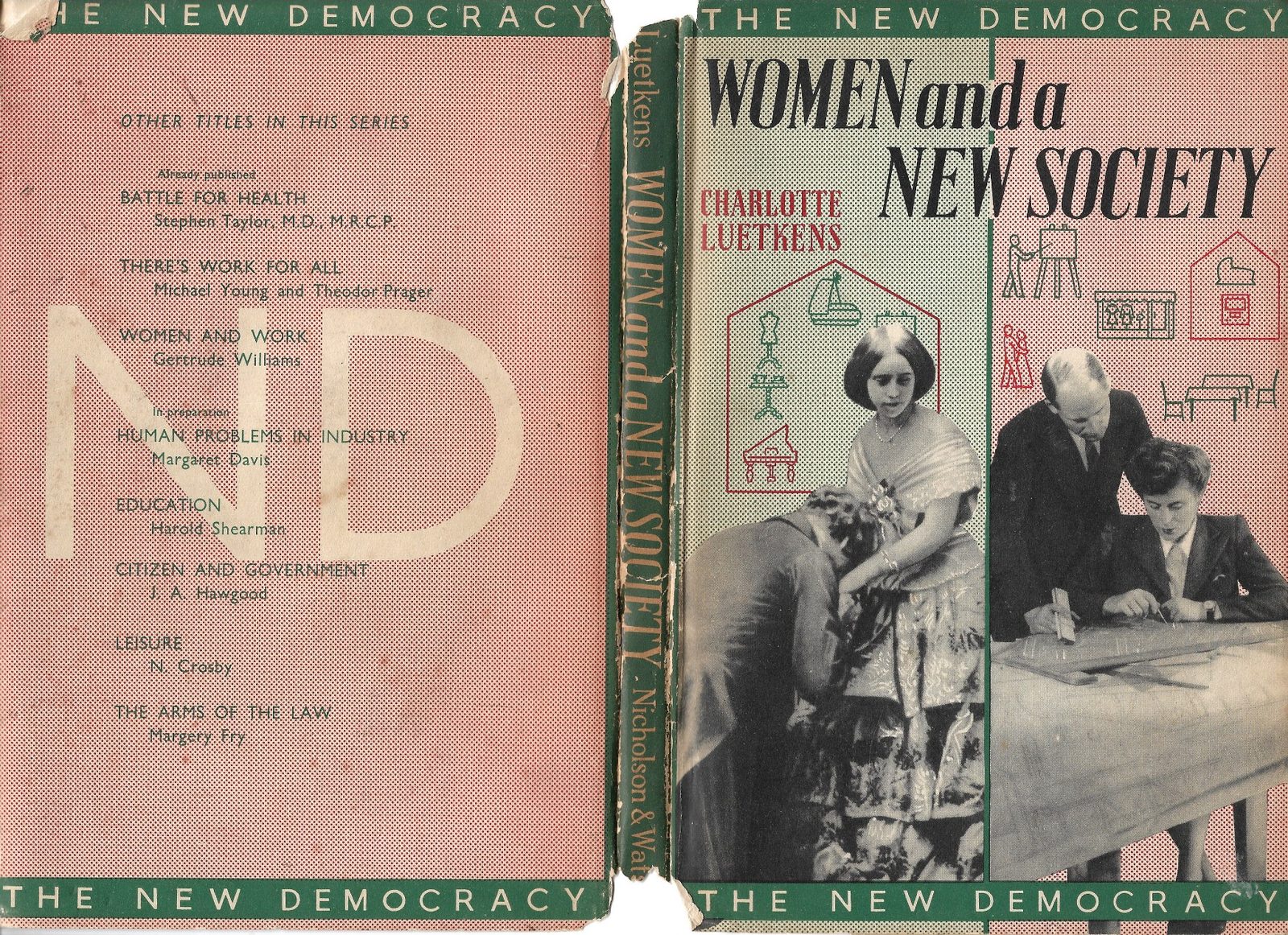
 Isotype Archive